
Seven blistering polemics contained in a small pamphlet. Out now on iodine.
Seven blistering polemics contained in a small pamphlet. Out now on iodine.
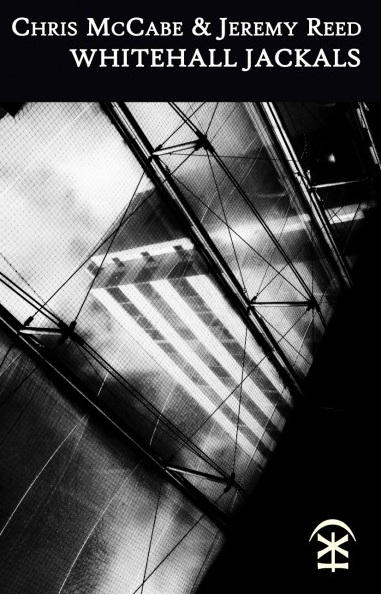
London in the dark end-times of the late noughties; escaped war criminals and their hired thugs scavenge like hyenas amid the city’s smut and glitter, the system appears in nonchalant free-fall and words drop cheaply as grimy metropolitan rain. With this dystopian backdrop, where language is spun, redacted and renditioned, McCabe and Reed’s gritty riposte performs an angry and elegant resistance.
The result of this psychogeographic collaboration between two of modern poetry’s most distinct voices is this – a poetry chain-letter that seeks to interrogate the city at one of the most peculiar and sinister points in contemporary history and to map the capital on foot, under their own light; poems as foundlings; the weight of language and place obsessively and voraciously explored. Beneath flagstones, in river silt and on the top decks of buses, the strange, dark energies of the city find their way into this electrifying exchange of poems. More at Inpress.
Poetry by:
and much more of interest at the e.ratio site.
New issue of the splendid reviews website.
Inlcudes reviews of:
Tom Jenks – Items
Derek Beauieu – Fractal Economies
Charles Bernstein – Recalculating
And lots more.
Follow the LINK

Robert Sheppard has given this book over to his own invention, the fictional Belgian poet René Van Valckenborch. Apparently writing in both Flemish and Walloon, and translated and edited by entities as shadowy (and dodgy) as himself, Van Valckenborch’s split oeuvre derives from the linguistic and cultural divide within contemporary Belgium. By the time Van Valckenborch disappears into poetic silence he seems an enigma of his own making, a comic figure with tragic attributes, a mystery to all swept up in his apparition. When his story is finished he leaves behind the deliberately discontinuous evidence of a dual poetic adventure – one half siding with history and opting for a breathlessly recurring triplet verse, the other obsessing over place and space and restlessly and increasingly playing with experimental forms. Behind and within them all, Sheppard is extending his formal and referential range: from homages to film-makers to Twitterodes, from accounts of tribal masks to cuboid quennets, and poems about Belgium of course. Above all, he is exploring the limits of the author-function. This is an imaginary collection with real poems in them. Out now from Shearsman.

Stephen Emmerson & Chris Stephenson.
Available now from Dark Windows Press.
Emmerson and Stephenson’s non-connotational word tennis match, No Ideas But In Things, is a mass scale invention of possible objects in the future: ‘WAG chaingangs’, ‘special needs fireworks’, ‘ewok sponsorships’. And a cataloguing of the trivia that invades our lives in the present: ‘pop star wheelchair’, ‘princess diana wet wipe’. Not least an exercise in creating the wondrous and beautiful: ‘lucozade onions’, ‘telephone chairs’, ‘barrack obama pyjamas’. Rather than playing this game in the psychiatrist’s chair they played it via text message – and it’s worked to their advantage, they get all the wrong words right. (James Davies: Editor ‘if p then q’)
A novel, out now.

“The House of Zabka” by Marcus Slease
A Polish folk tale meets Kurt Vonnegut’s surreal science fiction. A visionary, oracular original fairy tale that follows a butcher’s daughter to the deepest, darkest, strangest depths of the forest. A playful walk with a sausage-dog companion past sex shops and donuts, including a plastic dragon that will breathe fire if you text message it.
Each chapbook is roughly 4.25″ x 5.5″, handmade in a limited edition of 60. Stapled with handmade endpapers. Endpapers for “The House of Zabka” are marbled metallic multicolored Nepalese Lokta papers. Available from Deathless Press.
I Feel Good, by Sarah Sarai
Pixel’s Minutiae, by Chandler Lewis
Online now.

Out now on Knives Forks and Spoons press.
Poetry. THE PASSION OF PHINEAS GAGE & SELECTED POEMS presents the best of Jesse Glass’ experimental writing in a single volume. Glass’ ground-breaking work has been hailed by poets as diverse as Jerome Rothenberg, William Bronk and Jim Daniels for its insight into human nature and its exploration of forms. Glass uses the tools of post-modernism: collaging, fragmentation, and Oulipo-like processes along with a keen understanding of poetic forms and traditions that stretches back to Beowulf and beyond. Moreover, Glass finds his subject matter in larger than life figures like Phineas Gage-the man whose life was changed in an instant when an iron bar was sent rocketing through his brain in a freak accident. The product of over 30 years of engagement with the avant-garde, THE PASSION OF PHINEAS GAGE & SELECTED POEMS is the work of a mature poet who continues to reinvent himself with every text he produces.
A native of Carroll County, Maryland, Jesse Glass now makes his home in Tokyo, where he teaches American literature and history at Meikai (Bright Sea) University. His books include LOST POET: FOUR PLAYS BY JESSE GLASS (BlazeVOX Books, 2010), Gaha Noas Zorge (New Sins Press, 2009), and THE PASSION OF PHINEAS GAGE & SELECTED POEMS (Ahadada Books/West House Books, 2006). Praised by Geraldine Monk, Jerome Rothenberg, Michael Heller, William Bronk, and other major voices of contemporary experimental poetry, Glass is an internationally acclaimed performer of his own work and features prominently at PennSound, Ubu Web, and in dozens of other anthologies and magazines devoted to “the sweet science.” He is currently developing a puppetry and poetry theater with the aid of his students. Glass’s literary manuscripts are archived in Special Collections at the University of Maryland Libraries, College Park and ten of his handmade, painted books are in the collection of the Tate Gallery, London.
Published by Ahadada Books/West House Books.
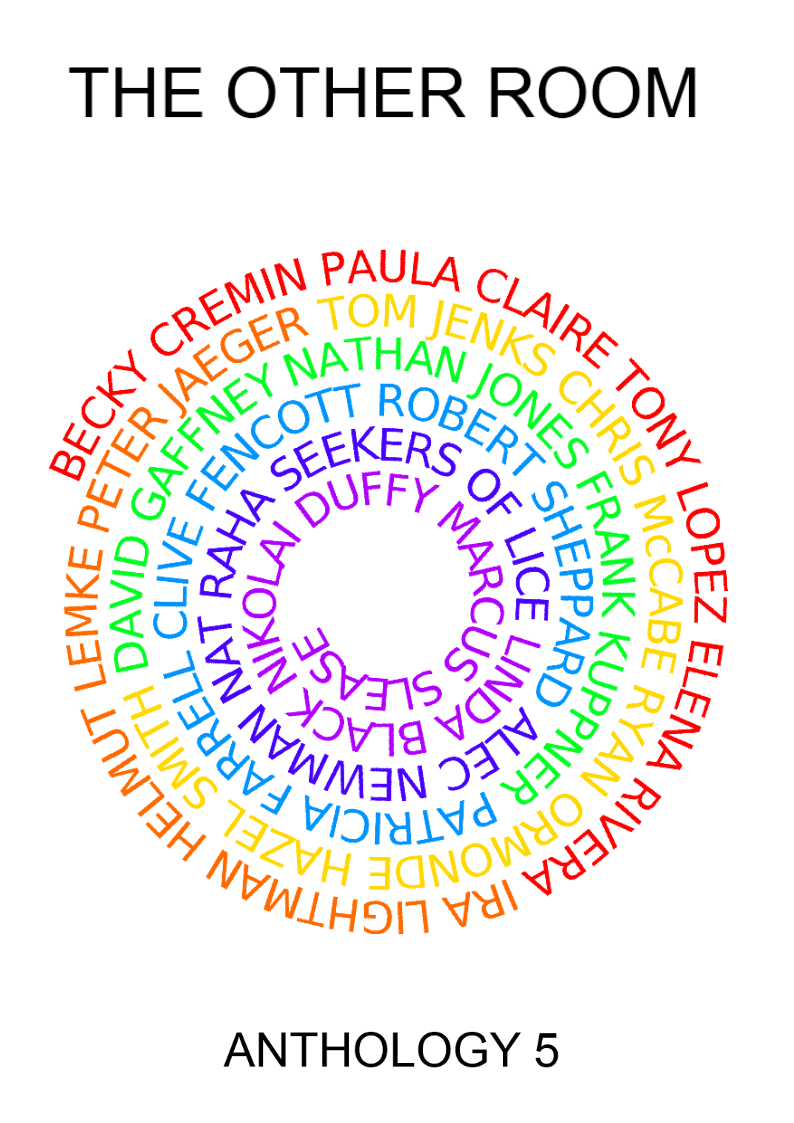
The Other Room Anthology 2012/13 is out now and features work from Linda Black; Paula Claire; Rebecca Cremin; Nikolai Duffy; Patricia Farrell; Clive Fencott; David Gaffney; Peter Jaeger; Tom Jenks, Chris McCabe and Sophie Herxheimer; Nathan Jones; Frank Kuppner; Helmut Lemke; Ira Lightman; Tony Lopez; Alec Newman; Ryan Ormonde; Nat Raha; Elena Rivera; seekers of lice; Robert Sheppard; Marcus Slease; Hazel Smith. Click here to buy a copy.
Contributor copies are on their way to all concerned.
The latest publications from Like This Press are two new collaborations by SJ Fowler with Ben Morris and David Kelly, the Estates of Westeros and Gilles de Rais. Each box contains 34 loose-leafed A5 postcards, blending text and image.
The Estates of Westeros is where avant garde poetry meets avant garde illustration. Whether perception or reality, housing estates are environments of occlusion, claustrophobia and damage, and poetry about them has a responsibility to reflect this complexity and intensity in its tone and form. The Estates of Westeros is a meditation on this living space through the universe of George RR Martin’s Game of Thrones, and where Gilles de Rais explores the absurdity of mythmaking in that which once was real, the Estates … explores the grinding realism at the heart of the fantastical.
In Gilles de Rais – an interchangeable narrative reflection on the life and legend of Gilles de Rais – this fusion of avant garde poetry and modernist line drawing aims to satirise and subvert the manner in which the monstrous myth surrounding such de Rais is echoed in our own time by Jimmy Saville. This is the disjunctive folklore of idiot’s resounding through the ages, from 15th century France to 21st century Britain.
Both books can be purchased for £9 direct from Like This Press: http://www.likethispress.co.uk/publications/sjfowlerandbenmorris
http://www.likethispress.co.uk/publications/sjfowleranddavidkelly
Special offer: buy the Estates of Westeros with Gilles de Rais together for £15 from here: http://www.likethispress.co.uk/specialoffers
the Estates of Westeros and Gilles de Rais launched as part of the Enemies of the North project on 30 March, at the Cornerhouse, Manchester. Both books will feature also in the group exhibition,Synesthesia, organised by Leap into the Void & held at Darnley Gallery, in Hackney, London, 12-19 April. For more information, see: http://leapintothevoid.co.uk/2013/03/26/synesthesia-15th-19th-april-2013/
SJ Fowler is a poet living in London. He’s published four collections of poetry including Fights (Veer books) and Minimum Security Prison Dentistry (AAA press), and has collections forthcoming from Penned in the Margins and Eggbox publishing. He has been commissioned by the Tate, the London Sinfonietta and Mercy and has read and exhibited across Europe. He curates the Enemies project, supported by the Jerwood Charitable Foundation, and Maintenant, a series of reading and interviews focusing on contemporary European poetics and collaboration. He is currently undertaking a Phd at the Contemporary Poetics Research Centre, Birkbeck College and is an employee of the British Museum. www.sjfowlerpoetry.com / www.blutkitt.blogspot.com / www.weareenemies.com /
David Kelly is an artist working in the modernist tradition, currently with a centre of interest in collage. He has collaborated with and ‘visually translated’ numerous writers and poets including David Berridge, Daniele Pantano and SJ Fowler. His collaborative works have been exhibited at The Saison Poetry Library, The Horse Hospital, My Pixxa and Rich Mix. He received a degree from the University of Leeds School of Fine Art, History of Art & Cultural Studies in 2007 and is now an employee of the British Museum.
Ben Morris is a London based experimental musician and artist. He has been active in the UK underground music scene since 2005 and is best known as 1 half of Chora, which he formed with Robert Lye in Sheffield. He has gigged and toured extensively throughout Europe receiving critical praise in The Wire magazine, on webzines such as The Quietus, Dusted and Foxy Digitalis and on radio stations like WFMU (America), VPRO (Holland) and BBC radio 3. Chora have a large multi-format back catalogue on labels like ChocolateMonk, Singing Knives Records and Winebox Press. He has played gigs with Sonic Youth, Wolf Eyes and Psychic TV as well as shows at Colour Out Of Space Festival, the ICA and at the Liverpool Biennial. He has received commissions from Mercy for collaborative sound performances with Steven Fowler. Other musical projects include: Le Drapeau Noir, Akke Phallus Duo and he records/performs solo as Lost Wax…
Out now, with work by Leanne Bridgewater, Iain Britton, Sarah Edwards, Stephen Hitchins and Andrew Nightingale.

Since the beginning of his poetic career in the 1990s, derek beaulieu has created works that have challenged readers to understand in new ways the possibilities of poetry. With nine books currently to his credit, and many works appearing in chapbooks, broadsides, and magazines, beaulieu continues to push experimental poetry, both in Canada and internationally, in new directions. Please, No More Poetry is the first selected works of derek beaulieu.
As the publisher of first housepress and, more recently, No Press, beaulieu has continually highlighted the possibilities for experimental work in a variety of writing communities. His own work can be classified as visual poetry, as concrete poetry, as conceptual work, and beyond. His work is not to be read in any traditional sense, as it challenges the very idea of reading; rather, it may be understood as a practice that forces readers to reconsider what they think they know. As beaulieu continues to push himself in new directions, readers will appreciate the work that he has created to date, much of which has become unavailable in Canada.
With an introduction by Kit Dobson and an interview with derek beaulieu by Lori Emerson as an afterword, Please, No More Poetry offers readers an opportunity to gain access to a complex experimental poetic practice through thirty-five selected representative works.

Out now on Like This press, Where Were You When the Stars Went Out? consists of a group of 10 poems in memory of the singer Jhonn Balance (of the group Coil), composed by applying a chance selection procedure derived from Jackson Mac Low to Rilke’s “Duino Elegies”, then treating the results of that process as a first draft to be edited, shaped, added to, deleted from, etc. Phil Davenport has commented how: ‘Nigel Wood allows himself to be a vessel of others’ voices, other modes of hearing. In this daring but subtle book he uses another human’s life as material for an experiment in both commemoration and forgetting. Where were you... is a scattered memorial for the musician Jhonn Balance, quite unlike the ‘lead graves’ and last words that are usually stacked up to make the obituary of a life. In fact, they frequently mock the ponderousness of death-speak and the gothic. But more intriguingly, as I read some of these pieces I have the sense that the lines have been somehow erased even as they’ve touched the surface of the page, they’re the gaps in narratives, the pieces of half-dusted thinking, the moments of lucidity that toppled. It’s a book that’s been lived rather than written, or, more fancifully, I suppose it’s a book that’s been ‘died’. Wood’s melodic transliterations of this other-space sing from from the page, they’re scores of what comes between – breathings-in and whiteout. This little book of un-ideas imprints on me deeply – and has done so from the first time I encountered it. The details are so sharp and so heavy: childhood’s illnesses evaporate across the inevitable scales to nowhere Poised to a nicety, Wood writes us into some impossible conjuring trick – a knife blade balancing atop a pebble. The delicacy of these moments is often vertiginous, unsettled. Jhonn Balance lived forcefully, embracing both the shitstorm and the big light. Where were you… somehow manages to employ the forces that impinge on living as components of composition. It’s as if horror and happiness, disappointment, ennui, forgetfulness, transcendence have become tools for shaping. And out of it all, something emerges that is brisk and full of marvelling.’
 otherroom.org