
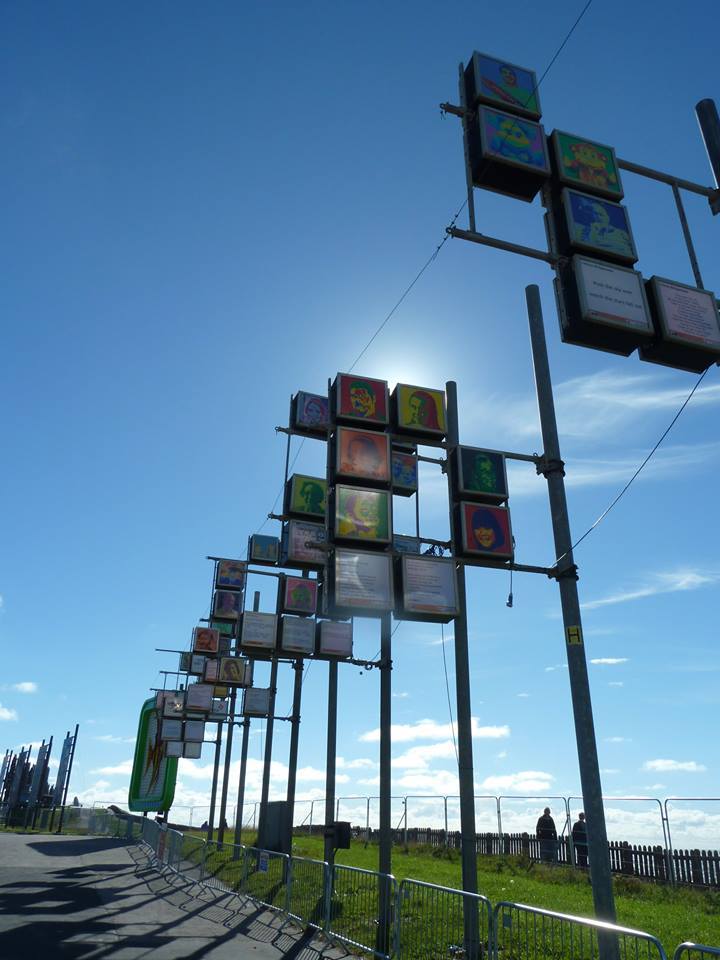
Exhibiting work by: Sue Birchenough, Prudence Bussey-Chamberlain, Gareth Farmer, Dylan Harris, Irene Koronas, Julia Lewis, D. E. Oprava, Scott Thurston, Rhys Trimble, and Lydia Unsworth, until 5th November.
Exhibiting work by: Sue Birchenough, Prudence Bussey-Chamberlain, Gareth Farmer, Dylan Harris, Irene Koronas, Julia Lewis, D. E. Oprava, Scott Thurston, Rhys Trimble, and Lydia Unsworth, until 5th November.

This is the first of two colour volumes collecting the visual poetry of the highly
acclaimed poet, artist & folklorist Jesse Glass. The volume contains five painted books that have been exhibited at Tate Britain, The Bury Text Festival, and in the Blackpool Illuminations – where they were seen by 193,073 visitors. These books are: Seven Mad Dances, Codex III, Hell Money Sequence I, Human Centred World, & Charm for Survivors. The books are handsomely presented in a large format (18 cm by 26 cm).
Jesse Glass is a Professor of American Literature at Mekai University in Japan. He has won the Deep South Writers’ Conference twice. Charm for Survivors is due to be performed on CNN in December.
Full details here.
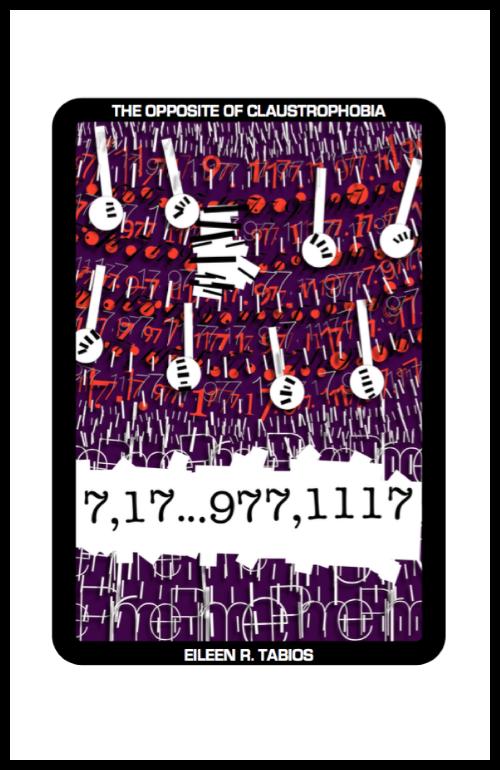
Startling, not just for the method but for the lines of breathtaking beauty resulting from it. These poems are tender, wistful and humorous, an incantatory catalogue that is spiritually tethered to the body and the earth, where everything is vital and important, and incites wonder, melancholy, and gratitude.
— Eric Gamalinda
While Georges Perec famously gave us a work of literature that began “I remember…”, Eileen Tabios gives us a very human sounding algorithm that lists for us what “I” has forgotten. In the backgrounds of paintings like those of Lucas Cranach, Bosch, Durer, Da Vinci, are castles, ruins, caverns. Each one is an invitation, a window into which I’d like to peer. In just such a way each of the lines of Tabios’ new work is an invitation to seek within the sfumato for a miniature clarity—sometimes the blinding light of a furnace, sometimes an old movie set swarming with quotation marks, sometimes lines that, with their specificity, invite us to linger and to imagine the margins full of novels, short stories, memoirs of: “Marisa peeling the skin from a blue-boned fish…Luisa who squatted beside betel-chewing crones with crooked front teeth, and Marjorie who swallowed the scarless sky over Siquijor.” Some lines are mere rungs for the hands and feet of angels and these I recommend to you most of all.
— Jesse Glass
Out now on KFS.

Out now on KFS.
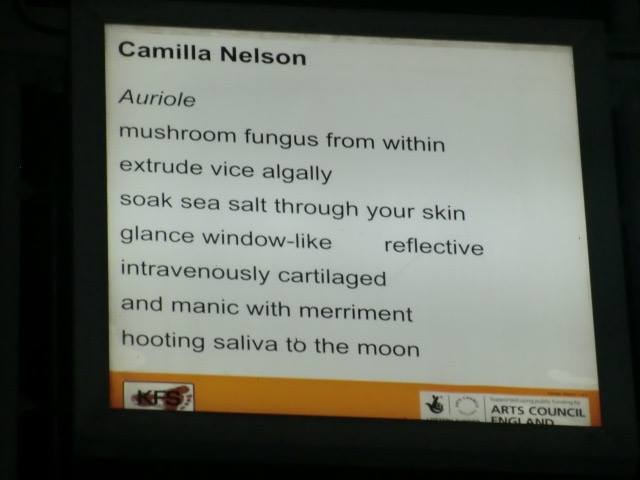
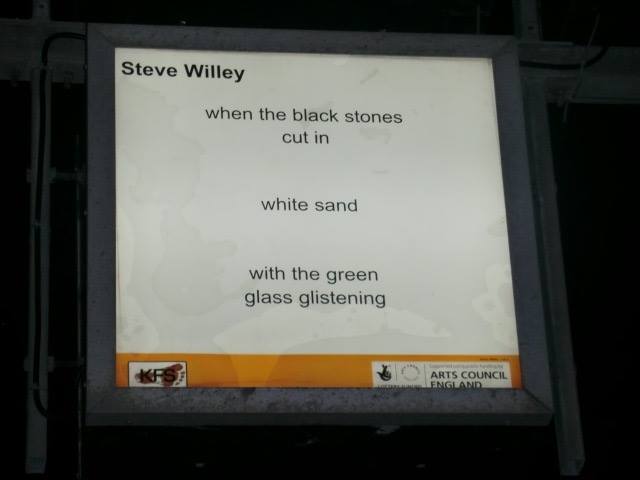
The Blackpool illuminations contain poems by many Knives Forks and Spoons poets.
Here are a couple of images and below are dates you can visit and a link to their location in Blackpool. It runs until November 6th.
http://www.blackpool-illuminations.net/2016/dates.html
https://www.facebook.com/pages/Knives-forks-and-Spoons-Illuminations/100219703767234
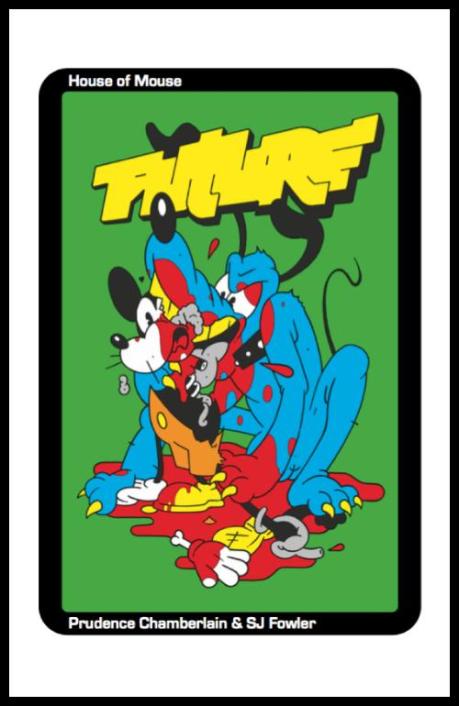
Discursive, playful, obscene and satirical, The House of Mouse is a collection of ten poetic collaborations written by British poets SJ Fowler and Prudence Chamberlain – each responding to a famed cartoon, each uncovering the bizarre overt and covert symbols and signs of these pervasive animations.
Dotted with original illustrations by contemporary artists like Lizzy Stewart and Duncan Marchbank, this unique collaborative collection aims to show that maybe the only thing stranger than corporate cartoon animals is avant-garde poetry.
To be launched as part of The Poetry School Camarade on July 17th 2016 at Rich Mix and The CapLet 1st year anniversary reading on August 10th at St Margaret’s House, both near Bethnal Green.
Out now on Knives Forks and Spoons.
Portugese launch of Servant Drone by bruno neiva and Paul Hawkins, published by KFS.
Saturday, 14th May, 1 PM. St.Helens Central Library Victoria Square St.Helens , WA10 1DY. Free. Knives Forks and Spoons press return to St Helens library with James Davies and Tom Jenks.

New book from Other Room reader Rachel Sills out now on Knives Forks and Spoons.

Other Room reader Leanne Bridgewater’s first collection of experimental poetry, out now on Knives Forks and Spoons.

Scott Thurston has edited a festschrift in celebration of Robert Sheppard’s sixtieth birthday, out now on Knives Forks and Spoons and available to buy for the reduced price of £10 until the end of December.
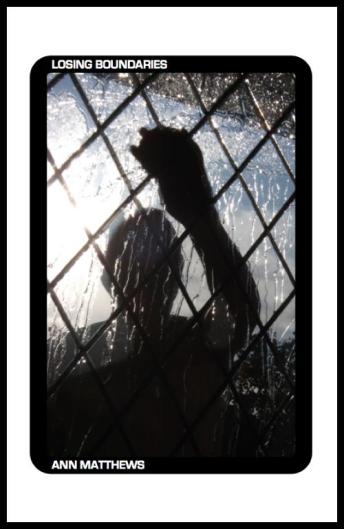
The KFS pop-up reading series continues at 13:00 on the 12th of December 2015 in the public area of St Helens Central Library, Victoria Square, St Helens, Merseyside, WA10 1DY. The readers are Tom Jenks and Ann Matthews, who will be reading from her new book, Losing Boundaries.


Words Out of Time deforms and reforms a story of Sheppard’s life as an othering, an ‘autrebiography’, in modes that include what he calls ‘unwriting’, working through and transforming diaries and journals. The Given tells it in four different ways, from a litany of what hasn’t been remembered, to an alphabetical disfigurement of its features. Arrival invents a demonic sibling, generated from the diaries, restlessly inhabiting lyrics, a short story, an essay and footnotes. In When Sheppard goes conceptual with ‘With’, while ‘Words’ weaves abandoned (found) texts to shake up this history; ‘Work’ distends temporality, reverses standard autobiography’s fascination with origins, slows down time to show how work works its way into a life. Out now on Knives Forks and Spoons.
James Davies, Ann Matthews, and others to be confirmed, at 13:00 on the 14th of March 2015 in the public area of St Helens Central Library as part of The Knives Forks and Spoons pop up reading series.
Central Library, Victoria Square, St Helens, Merseyside , WA10 1DY

Lucy Burnett, Tom Jenks, Paul Sutton, Rhys Trimble, Debbie Walsh. 7 March at 20:00. The Britons Protection 50 Great Bridgewater Street, Manchester, M1 5LE.
 Lots of new and interesting titles as always, including this by Jesse Glass. More at the KFS site.
On Saturday 4th October from 1pm to 4pm featuring PATRICIA FARRELL, ROBERT SHEPPARD JAMES BYRNE and JOANNE ASHCROFT, all of whom have books published by KFS, at St Helens Library, Victoria Square, St Helens, Merseyside, WA10 1DY. If you are travelling by train, DO NOT GO TO St HELENS JUNCTION. Instead, travel to St Helens Central Station.
Four Knives Forks and Spoons poets Richard Barrett, Ryan Ormonde, Sarah Leavesley and Anna McKerrow, recently talked about their work on Resonance FM. The broadcasts have now been archived and you can listen to them via the Knives Forks and Spoons site,
 otherroom.org