

Datableed is open for submissions for issue 8 until August 13th. See here.
Datableed is open for submissions for issue 8 until August 13th. See here.
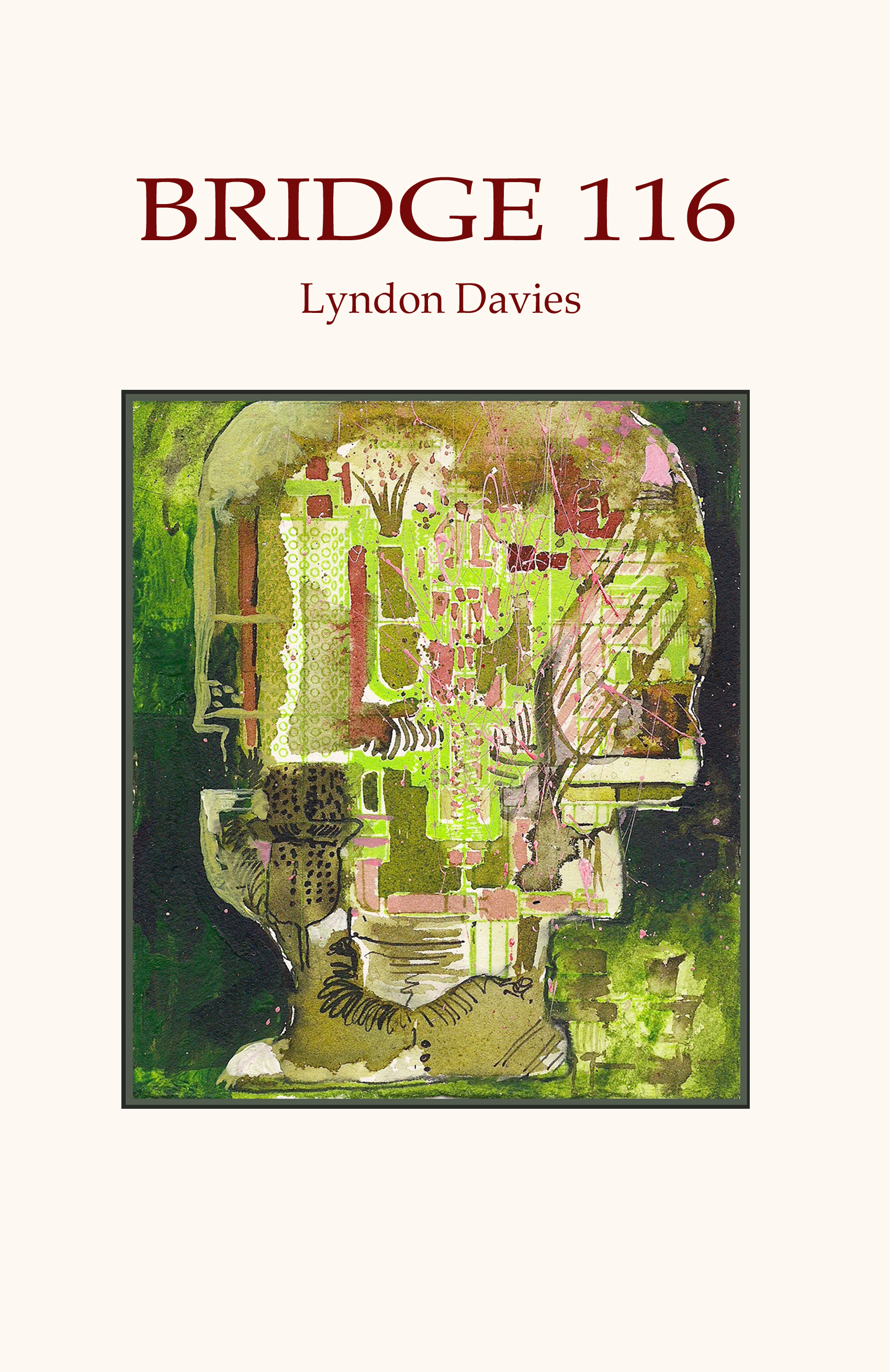
Lyndon Davies’ fourth collection takes a high-dive into the vast but weirdly personal and particular mysteries of place and belonging.
Shifting through forms, registers and perspectives, part journal, part improvisation, part hallucination,
Bridge 116 explores a vision of locality both specific and haunted by many kinds of news from elsewhere. Full details here.
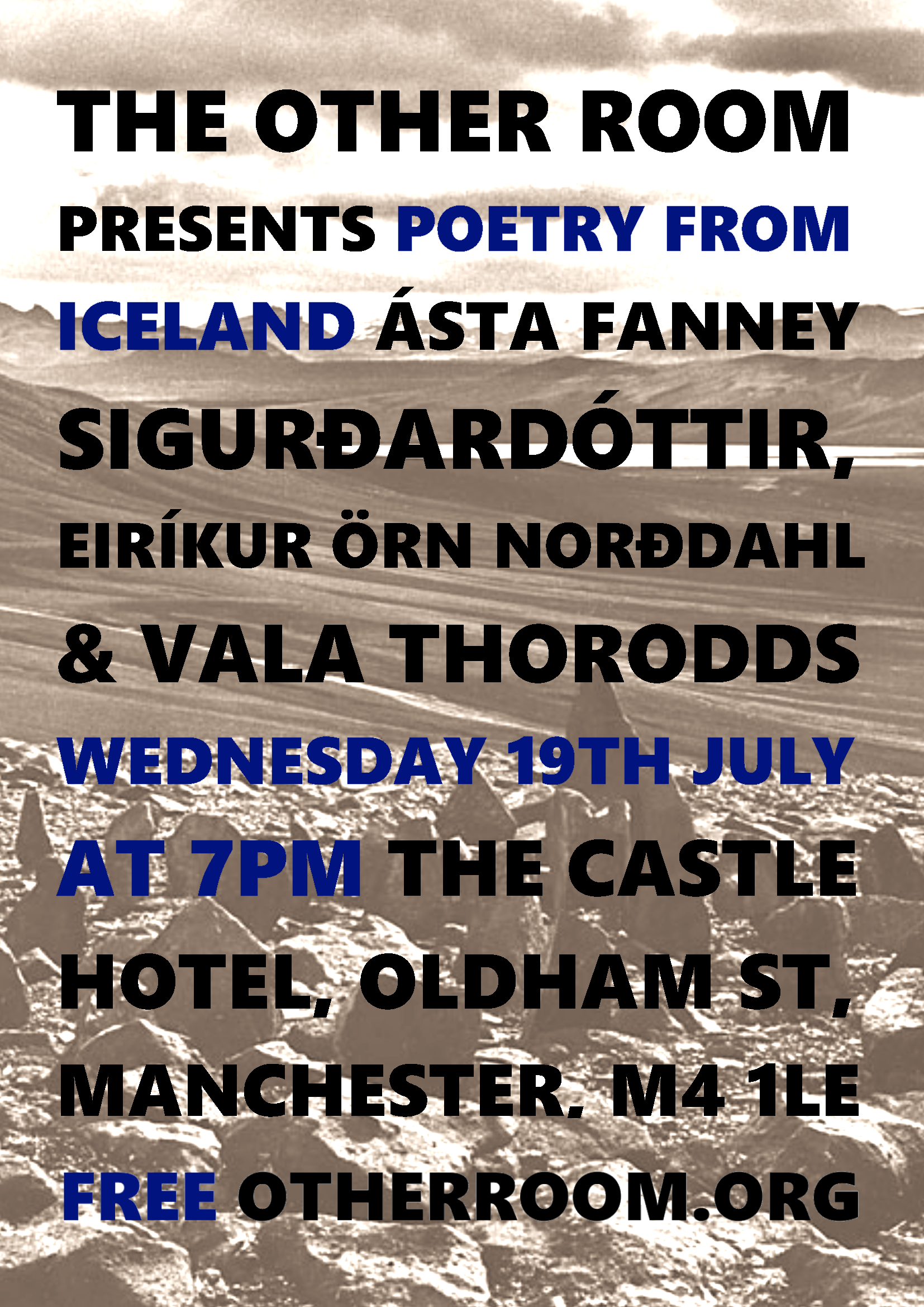
Join us tonight at the Castle Hotel, Northern Quarter, Manchester for an evening of poetry from Iceland, with Ásta Fanney Sigurðardóttir, Eiríkur Örn Norðdahl and Vala Thorodds. Free entry.

20 July at 19:30. I K L E C T I K, ‘Old Paradise Yard’ 20 Carlisle Lane, London, SE1 7LG.
New episode of Adrian Slatcher’s podcast looking at what’s coming up in Manchester, including a mention of our poetry from Iceland event on Wednesday. Listen here.
 New from Other Room reader M.J. Weller, here.

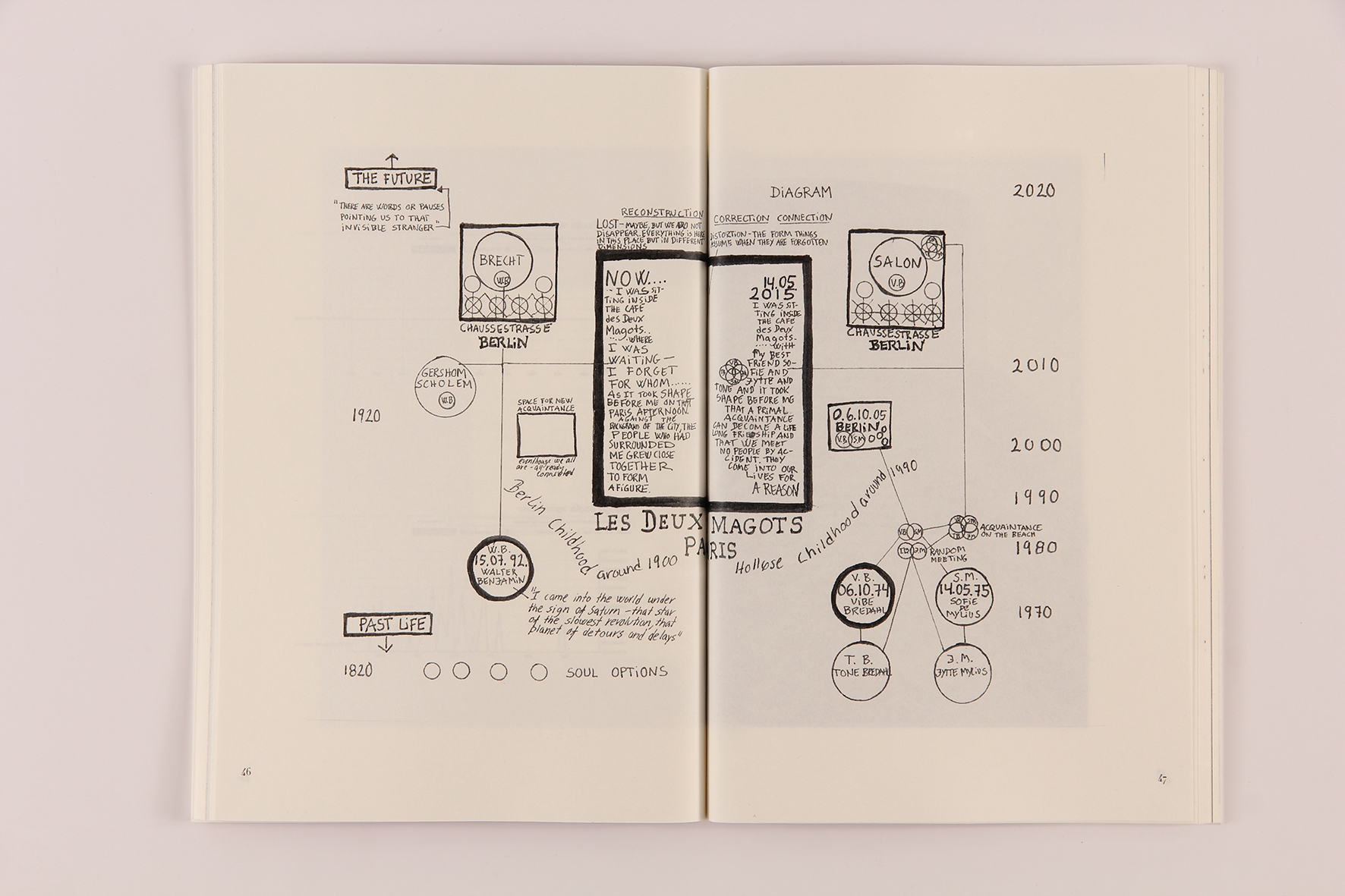
Edited by Helen Clarke & Sharon Kivland
Essays by Helen Clarke, Sam Dolbear, & Christian A. Wollin
THE LOST DIAGRAMS
Cos Ahmet, Alberto Alessi, Sam Ayres, Patrizia Bach, Martin Beutler,Riccardo Boglione,Vibe Bredahl,
Pavel Buchler & Nina Chua, Emma Cheatle, cris cheek, Kirsten Cooke, Anne-Marie Creamer, Amy Cutler,
Vincent Dachy, Matthew Dowell, Joanna Leah Geldard, Theresa Goessmann, Michael Hampton, Ronny Hardliz, Miranda Iossifidis, Joe Jefford, Dean Kenning, Tracy Mackenna, Bevis Martin & Charlie Youle, John McDowall, Katharine Meynell, Paul O’Kane, Hephzibah Rendle-Short, Mark Riley, Katya Robin, Hattie Salisbury, Isabella Streffen, Stefan Szczelkun, George Themistokleous, Monique Ulrich, Emmanuelle Waeckerle, Matthew Wang, Julie Warburton, Alexander White, Lada Wilson, Louise K. Wilson, Mark Wingrave, Mary Yacoob.
In A Berlin Chronicle Walter Benjamin describes his autobiography as a space to be walked (indeed, it is a labyrinth, with entrances he calls primal acquaintances). The contributors to The Lost Diagrams respond to the invitation to accompany Benjamin in reproducing the web of connections of his diagram, which, once lost (he was inconsolable), was never fully redrawn. They translate his words into maps, trees, lists, and constellations. Their diagrams, after Benjamin, are fragments, scribbles, indexes, bed covers, and body parts. Subjectivities sharpen and blur, merge and redefine, scatter and recollect. Benjamin writes: ‘Whatever cross connections are finally established between these systems also depends on the inter-twinements of our path through life’.

July 27, July 29 and August 3, 2017
Manchester Opera Project presents Festival ONE : three evenings of dramatic works for the voice with a focus on the monologue. The festival includes premieres of three MOP commissioned monodramas by composers Laura Bowler, Ailís Ní Ríain, Michael Rose and Philip Venables, readings of new operas in progress by Marco Galvani and Jonathan Higgins and an unforgettable performance by Manchester poet Tom Jenks of his MOP commissioned libretto, Crabtree (the libretto) for solo voice and imaginary bear. The reading will be accompanied by live, improvised double bass. Special mystery guest poet as “the bear”. Full details here.
Vala Thorodds will be performing at our evening of poetry from Iceland on Wednesday 19th July at the Castle Hotel, Northern Quarter, Manchester. More details here.
Vala Thorodds is a poet, publisher, editor, and literary curator. She is founding director of the independent literary press Partus and managing editor of the Manchester-based poetry press Sine Wave Peak. Hailed ‘the future of Icelandic poetry’ (Sjón), she was nominated on behalf of Iceland to the PEN International New Voices Award (2014) and has had poetry published in a number of anthologies and magazines including Gutter, Magma, and The White Review online.

‘In Safe Mode, Sam Riviere boots us into a brazenly undesirable working environment. It’s an atmosphere, a tint, it’s what might happen when clicking back and forth between tabs in this or that rental dump, shifting mental zones, measuring out days through data and the het-up in-folding of strangers. Sam’s major flair is for channelling our maladapted, disassociated softwares. Broken spam filters, tick removal, the world’s saddest polar bear, undealt-with undertones and a ghostly parade of totemic, masculine constructs rise up out of apparently benign linguistic matter. Like being run through a memory test, repetitions occur in sneaky guises, the faulty bits are re-jostled. In here, words and images are fleeting engagements, but, the text implies, attention is your resource – and, if you stay around and look again, you’ll find even stranger zones firing up in the background.’ – Heather Phillipson.
Out now on Test Centre. Safe Mode will be launched at Burley Fisher Books on Wednesday 12 July at 7pm. Details here.
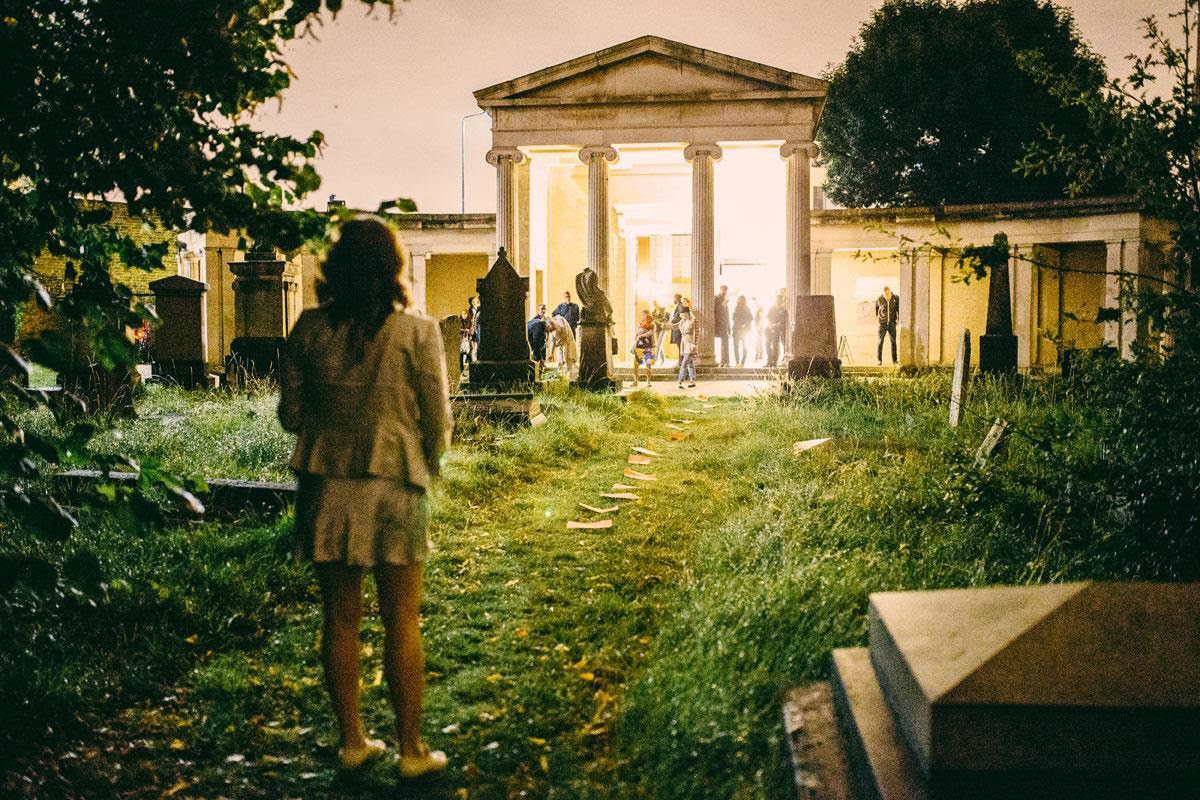
Celebrating Erich Fried / The Ecchoing Green / Landscape learn : Growth and Decay – all at Kensal Green Cemetery Dissenter’s Chapel
Three unique events taking place in the first half of July, each in the remarkable grade II listed Dissenter’s Chapel of Kensal Green Cemetery in West London. 391 Ladbroke Grove. London W10 5AA. Entrance via Cemetery door on Ladbroke Grove.
July Thursday 13th : The Ecchoing Green with Chris McCabe, Tom Jeffreys and SJ Fowler.
Time: 7:00 PM – Free entrance www.poetrylibrary.org.uk/events/readings/?id=13145
This event will celebrate Chris McCabe’s ongoing publication project with Penned in the Margins, following In The Catacombs and Cenotaph South, with new work responding to Kensal Green Cemetery. // This event will see the launch of Worm Wood, Old Oak, a new piece of short fiction by SJ Fowler, published by Sampson Low, written about the Cemetery and its impending neighbour, the Old Oak development. // This event will explore Tom Jeffrey’s Signal Failures, published by Influx Press, which provides, through a walk along the proposed route of HS2, a wide-ranging critique of humanity’s most urgent failures. – An evening of readings and discussion with three of the UK’s most interesting presses, poets and writers.
July Saturday 15th : Landscape Learn – Growth and Decay
Time: 12:15–15:30 Tickets £10 on Eventbrite
https://landscapelearn.com/index.php?p=events/growth-and-decay
Landscape Learn is a new prototype for learning and engaging with the landscapes around us. Landscape Learn will use the seasonality of nature to structure our approach to adaptive and immersive learning. A pioneering new project from J&L Gibbons.
Growth and Decay will explore how our identity and wellbeing is intrinsically linked to the socio-geographic context of our lives. Co-hosted by Poet SJ Fowler, the Kensal Green Cemetery, forms a distinguished and biodiverse context for a discussion on health and wellbeing in a changing city. We will walk through Kensal Green Cemetery, and look back to look forward with Museum of London osteologist Jelena Bekvalac who specialises in reading the bones of dead Londoners. Neuroscientist Dr Andrea Mechelli of King’s College London, Michael Smythe of Nomad Projects, Jo Gibbons and Neil Davidson, Urban Mind collaborators will discuss citizen science and realtime collection of data on state of mind in the city. Dr Tereza Stehlikova’s film pieces of a disappearing neighbourhood will be screened in the Dissenters’ Chapel.
All events are part of Worm Wood, an exhibition and residency in Kensal Green Cemetery Dissenter’s Chapel throughout the summer by Tereza Stehlikova and SJ Fowlerwww.theenemiesproject.com/wormwood
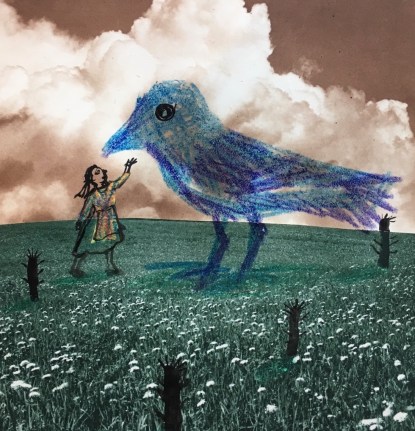 15 July – 5 August, The Art Stable, Kelly Ross Fine Art, Child Okeford, Blandford, Dorset, DT11 8HB. Private View on the 22 July 11am-3pm. Conversation and poetry reading with Gigi and Sophie at 3pm on Saturday 22 July. Please contact the gallery to reserve a place. Open Thur – Sat 10-3.
Sophie Herxheimer brings her customary energy to these new collages, which fuse her precision with colour and composition with her continuing fascination with poetry, and her own writing.
The series she has made in ‘ghost collaboration’ with American poet Emily Dickinson, pictures the reclusive female poet as having a vast inner landscape, mirroring her emotional range, by using cut up duotone tourist photographs of the Alps. Herxheimer has then written poems into these imaginary worlds: placing words on oversized raindrops, surreal advertising hoardings, or in sampler-like sewn on patches from a shared girl-scholar’s trousseau.
The thoughts are distilled and integrated, at home in the rocks, clouds, blossom, mountains, ready to be absorbed by the wandering viewer’s mind. These works spring from the artist’s readings of Dickinson but the images and poems are all Herxheimer’s own.
Parallel to these pieces, Herxheimer has created a series of collages without text, which relate to Fairy Tale. We see a lone female figure walking on a mountain ridge amongst stone pots and pans, while below her in the valley a chalice sits glowing with the golden elixir of life. She may never come across it. In another, the Goose Girl stands, transparent in pencil, still exchanging stories with the decapitated horse she used to ride as a princess. The works often feature two characters, suggesting inner dialogue: the artist in conversation with the gigantic crow that rules her from within, the artist negotiating with all the artists of the past, with planets made of glue, with politics and expectations. These collages show the strangeness of the ordinary, the journey we are all on; using playful tropes like improbable scale, words that run counter to image, anti-naturalistic colour, to subvert logic and invite the imagination into bread, daisy, street.
Gigi Sudbury’s paintings focus on the moment we allow a synthesis of intuition and experience to take hold. In the lone figure she recognises an act of defiance, the shedding of limitations and the move into a moment outside our hare-brain lives. Here a bird perches close, moonlight catches a reflection, flesh becomes transparent, shadows becomes solid. Her paintings are the start of an adventure when time ticks by without measure.
Sudbury paints mountain tops, rivers, skyscrapers, a father and angels, the moment between day and night. She uses fragments of words or letters to mark our desire to speak, but words aren’t always enough. She learnt from Piero, Chagall and DuBuffet that painted feelings are different.
In this collection Sudbury alludes to today’s digital revolution moving beyond our ability to answer the ethical questions it raises. She explores our technology driven world with the age-old discipline of mark-making. Much from our human history holds us together but while cultural lore adapts with the times it also prolongs ideas that are false or extraneous. Here she asks where and what we will become: half human, half computer, a being of a once fairy-tale future?
Sudbury’s paintings are optimistic and a celebration of human endeavour.
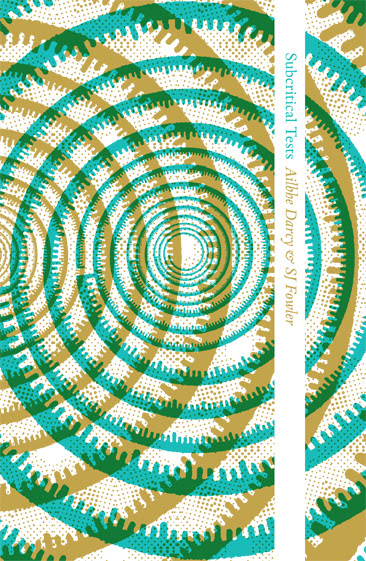 A new collaborative work out now on Gorse.
The nearness of nuclear holocaust, always just one clumsy accident away, forms an entry point into this record of a friendship. The poems in Subcritical Tests stubbornly make connections, ever conscious of the impending threat of annihilation. Oblique, modern, lyrical, humorous, these poems represent the range of Ailbhe Darcy and SJ Fowler‘s individual practices, modulated and melded through the collaborative process.
Ásta Fanney Sigurðardóttir will be performing at our evening of poetry from Iceland on Wednesday 19th July at the Castle Hotel, Northern Quarter, Manchester. More details here.
Ásta Fanney Sigurðardóttir is a poet and multi-disciplinary artist. Her work occupies the borderland between performance art, experimental music and poetry. She combines elements of surrealism and satire in the pursuit of a re-mystification of the everyday. ‘Clever, funny, both thought-provoking and soothing’ (The Reykjavik Grapevine), she has performed at festivals, exhibitions and readings around Europe, including the Venice Biennale.

“I think these are my favourite poems of [John Goodby’s]. They have some kind of indefinable charge. It’s like being in a calm dark room with little slots and windowlets opening just briefly onto brilliantly lit spaces out there and all over and then closing again before you can get a really good look. What you carry away is a sort of richly coloured composite many-layered image which seems to add up to something suggestive of the archaeological remains of what was once at various points in time and space something resembling a unified human emotional consciousness. I find them exciting.” – Lyndon Davies.
More here.

Sep 18th – Sep 23rd 2017. Lumb Bank, The Ted Hughes Arvon Centre, Heptonstall , Hebden Bridge, HX7 6DF. With Scott Thurston, Harriet Tarlo and Maggie O’Sullivan.
This course is suitable for poets who would like to explore innovative poetic techniques, throw over old habits, or push their work further. You will be encouraged to explore a diversity of poetic forms and uses of language, such as open form, collage and juxtaposition. Your tutors will bring to bear their background in the UK’s innovative poetry scene, introducing you to the approaches of British and American experimental poets as a means of encouraging you to play and take risks in your own work. They will also help you explore some of the many ways of setting off into the unknown, and returning enriched, wiser, changed. More details here.

This is the first of two colour volumes collecting the visual poetry of the highly
acclaimed poet, artist & folklorist Jesse Glass. The volume contains five painted books that have been exhibited at Tate Britain, The Bury Text Festival, and in the Blackpool Illuminations – where they were seen by 193,073 visitors. These books are: Seven Mad Dances, Codex III, Hell Money Sequence I, Human Centred World, & Charm for Survivors. The books are handsomely presented in a large format (18 cm by 26 cm).
Jesse Glass is a Professor of American Literature at Mekai University in Japan. He has won the Deep South Writers’ Conference twice. Charm for Survivors is due to be performed on CNN in December.
Full details here.
Eiríkur Örn Norðdahl will be performing at our evening of poetry from Iceland on Wednesday 19th July at the Castle Hotel, Northern Quarter, Manchester. More details here.
Eiríkur Örn Norðdahl (1978) is an Icelandic poet and novelist. For his novel Illska (Evil, 2012) he was awarded The Icelandic Literary Prize and The Book Merchant’s Prize, as well as being nominated for the Nordic Council’s Literary Award. When it came out in France in 2015 it was shortlisted for the Prix Médicis Étranger, the Prix Meilleur Livre Étranger and received the Transfuge award for best nordic fiction 2015. In 2012 he was poet-in-residence at the Library of Water in Stykkishólmur, in 2013 he was chosen artist of the year in Ísafjörður and in 2014 he was writer-in-residence at Villa Martinson in Sweden. Since his debut in 2002 he has published six books of poems, most recently Hnefi eða vitstola orð (Fist or words bereft of sense, 2013), five novels and two collections of essays. Eiríkur is also active in sound and performance poetry, visual poetry, poetry film and various conceptual poetry projects. Eiríkur has translated over a dozen books into Icelandic, including a selection of Allen Ginsberg’s poetry and Jonathan Lethem’s Motherless Brooklyn (for which he received the Icelandic Translation Award), but most recently Ida Linde’s Maskinflickans Testamente. He lives in Ísafjörður, Iceland, a rock in the middle of the ocean, and spends much of his time in Västerås, Sweden, a town by a lake.
 Wednesday, June 28 at 6:50 PM. St Margaret’s House, 21 Old Ford Road, London, E2 9PL, with Phil Minton, Nisha Ramayya and Jonathan Catherall.
CapLet is about reading, discussion, and performance of experimental poetry.
 otherroom.org