David Berridge: The Moth Is Moth This Money Night Moth review

This review was originally published in Department Magazine, issue 1. A number of ammendments have been made from that version. David Berridge reads at The Other Room on August 24th.

This is better read as a PDF to see the layout of the poem.

The Moth Is Moth This Money Night Moth
By David Berridge
The Knives Forks and Spoons Press
Reviewed by James Davies

David Berridge’s The Moth Is Moth This Money Night Moth is a real delight. The work seems to me to mix minimalist and expressionist concerns.  It is a work that chooses and places words which stand for themselves and also work pragmatically. Words also often seem to stand for the materiality of other words. This is achieved in misspellings, use of brackets and asterisks, thus extending the connotations within a single set of graphemes much in the same way that Geof Huth’s ntst does and some of Aram Saroyan’s seminal work from the 60s. So for example the second page reads:

gleen gnouth fnow

t (longue)   l (lake)

night (night)

The words in the poem are easily readable as other words. So that gleen =  ‘green’. gnouth = ‘mouth’. fnow = ‘snow’ and ‘for now’ as in ‘f’now’. t (longue) = a long tongue. l (lake) can be read as an example of stuttering, perhaps a reconfirmation that the word on the page, and that the image denoted, is indeed ‘lake’ – maybe a specific lake to Berridge but in leaving the lake unlabeled it is very much the reader’s lake, whether that is a named lake or the concept of ‘lake’.

The book reads as a sequence, not of fragments but as a whole; a sort of narrative. Yet the memories are not totally cohesive. The events are blurred or disguised in order to make the sensations stronger for the reader and make the experience far more democratic. It is the reader’s responsibility to choose whether they make the work confessional or not; confessional from Berridge’s point of view, or whether Moth triggers an event which the reader remembers. By this I mean that ‘lake’ in this poem seems to be a romantic symbol. By not being labeled it is so open that it can be substituted for any other romantic symbol of the reader’s making: beach, hill, bedroom, etc.  With leanings towards romance (and also Buddhism) one is transported into one’s own memories – not Berridge’s. A minimalist poem has this power – we are the subject. DB gives something to me. A gift. However Berridge’s experience is clearly in there and thus Moth has expressionist tendencies too.

Moth is a world full of sense and cross-sense sensations, of feeling the inner light of the body or that of another’s body. On page 1 it is suggested that the body is integrated with/within the lake:


feet lake green lake mouth lake felt lake night night lake tongue lake


Reading left to right 13 words are strung across the page with every other one being ‘lake’ until the pattern is broken on the tenth word with ‘night’ replacing ‘lake’. This could be seen as the lake disappearing from eyesight as the night falls. ‘night’ is also the ninth word and this also promotes the idea that night falls. But ‘lake’ then reappears as the eleventh word. Perhaps this represents the coming of morning. Or perhaps a viewer focuses on ‘night’ and then switches his gaze to ‘lake’. The lake then reappears out of sequence and is taken over by the twelfth word ‘tongue’ and then consumes ‘tongue’ in the thirteenth word ‘lake’; surely an erotic image. Also ‘lake’ coming out of sequence is a glitch; again the reader chooses the implications of this glitch. It could be read as the haziness of memory or perhaps the way ‘perfect events’ have ‘wobbles’ in them.

Page 4 in part reads:

wnow        outh

These work as heavy signs for ‘wow’, ‘snow’, ‘now’, ‘know’, ‘south’, ‘mouth’, ‘moth’ where again the reader chooses referents whilst being aware that what is actually on the page is actually a nonsense of no semantic value. As we move through Moth there are recurring motifs: ‘night’, ‘green’, ‘tongue’, ‘star’. But there are intrusions: ‘money’ and ‘fashion’ which appear often after page 4. A Money Moth by the way is a moth which is often associated with bad luck as it eats crops. This use of the word ‘money’ and its association with ‘the moth’ is a sudden negation, and imperfection, into what has been up until now idyllic landscape and mood; there is no such thing as perfection it suggests, all joy is transient.

However these intrusions never dominate in Moth. If we look at part of the middle pages:


t*o*n*

g*u*e

we see a visual play of snow falling on the tongue. And later on the same page:


snow = star

Snow is star and vice versa. The mass noun of ‘snow’ stops this image being personal as it is not fixed in a particular moment. It is about the idea of ‘snow’ and therefore we have to read star as the idea of ‘star’; perhaps their equivalence and perhaps combination. The reading of this short passage is made more difficult as it could be we are meant to assume an article is attached to ‘star’ and if it is we are not sure if ‘star’ is definite or indefinite. The same ambiguity applies to ‘snow’ as it could be ‘the snow’. This again shows that we can take the objects/words in Moth for what they are and also for what they could be.[1] 

It is true that a sadness pervades here and there in the collection, Berridge’s landscape is not completely filled with joy – ‘money’ and ‘fashion’ interrupt ‘snow’, ‘stars’ and ‘lakes’ – but more regularly than not we move beyond colour , and experience happiness. That’s good. The Moth Is Moth This Money Night Moth is a really fine book. Go experience it.


[1]  Similarities to other poems immediately occur. Yoko Ono’s poems/proposed performances in Grapefruit memorably use these two key elements of snow and star: yellow and white; the celestial. And Robert Grenier’s drawing poems are also connected. See http://www.parametermagazine.org/grenier.htm for my take.
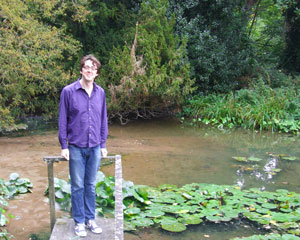
David Berridge: a preview

David Berridge will be performing at the next Other Room on Wednesday 24th August, along with Rachel Lois Clapham and Philip Terry. For a flavour of his work, try Game, Global, Green, Grown, Guys at Beard of Bees, Black Gardens at The Red Ceilings Press and  SPIT & PRAXIS: DOG MAN SPEAKS in Streetcake Magazine. Check out too his VerySmallKitchen project, which he describes as “inhabiting, defining and exploring spaces of connection between writing and art practice; text, book and exhibition; curating and authorship. ”

Previews of Rachel Lois Clapham and Philip Terry to follow soon.

The Other Room 27: one month away

The next Other Room will be on Wednesday 24th August at The Old Abbey Inn, 61 Pencroft Way, Manchester, M15 6AY, on Manchester Science Park. The performers are David Berridge, Rachel Lois Clapham and Philip Terry. 7 pm start. There will be a bookstall stocked with publications from the three performers and other books, chapbooks, pamphlets and objects from the north-west’s vibrant small publishing scene.

The Other Room is always free, but you can book a ticket via Eventbrite. This will let us know you are coming and put you on our mailing list. Eventbrite will also give you updates and reminders relating to this event.

Details of the three performers below. Previews of each will appear here over the next month.

Follow us on Twitter as #otherroom

Find us on Facebook as Other Room.

*

DAVID BERRIDGE lives in London, where he curates VerySmallKitchen. He makes language works for exhibition, performance, print and online publication. In print, The Moth Is Moth This Money Night Moth is published by The Knives Forks and Spoons Press and Kafka Thinking Stations: A Chora(L) Song Cycle by The Arthur Shilling Press. Electronically, Game, Global, Green, Grown, Guys is published by Beard of Bees and Black Gardens by The Red Ceilings Press.
*
RACHEL LOIS CLAPHAM produces writing on and as performance as part of UK collaboration Open Dialogues and curates radical writing with the Arts Council partnership In a word…. Her own practice points…, punctuates movement and presses on physical gestures as text. Recent work includes Re- (PSL Gallery Leeds, Norwich Arts Centre and John Latham Archive London), WORK TRY HARD (Kaleid Editions) and (W)reading Performance Writing : A Guide (Live Art Development Agency).  wwwopendialogues.com
*
PHILIP TERRY was born in Belfast in 1962. He has taught at the universities of Caen, Plymouth and Essex, where he is currently Director of Creative Writing. His fiction, poetry and translations have been widely published in journals in Britain and America. His books include the celebrated anthology of short stories Ovid Metamorphosed (Vintage, 2000), Fables of Aesop (Gilliland Press, 2006) and the poetry collection Oulipoems (Ahadada, 2006). In 2008 Carcanet published his acclaimed translation of Raymond Queneau’s Elementary Morality. His latest Carcanet collection Shakespeare’s Sonnets was published in 2010. His chapbook Dante’s Inferno is published by Oystercatcher Press.

UNFIXED

Flat Time House is pleased to host a weekend of events organised by Reading for Reading’s Sake with:

David Berridge, Maurice Carlin, Rachel Lois Clapham and Emma Cocker, Patrick Coyle, Ella Finer, John Hill, Helen Kaplinsky and Stefan Sulzer

UNFIXED is a series of events developed by Reading for Reading Sake (RfRS)

Flat Time House, John Latham Foundation and Archive, London

 2-4 December

LINK

Closing weekend of Writing / Exhibition / Performance at The Pigeon Wing

Last chance to see the exhibition. Also a variety of live art and performances over the weekend:

Sat 2nd October Live Writing

Artists in residence in the space throughout the weekend include  Matt Dalby, Pippa Koszerek, Rachel Lois Clapham, Marianne Holm Hansen, and Press Free Press.

Sun 3rd October Live Writing

Artists in residence in the space throughout the weekend include  Matt Dalby, Pippa Koszerek, Rachel Lois Clapham, Marianne Holm Hansen, Karen Di Franco/ CONCRETE RADIO and Press Free Press.

7pm, Closing meal / Performance event

Performances include Julia Calver, Matt Dalby, James Davies, Marianne Holm Hansen, Press Free Press, and Helen Kaplinksy.

LINK

WRITING/ EXHIBITION/ PUBLICATION: VerySmallKitchen at THE PIGEON WING 3 Sep – 3 Oct 2010

Curated by David Berridge, VerySmallKitchen in residence at The Pigeon Wing presents a month long exploration of how writing moves (or not) between the locations of WRITING/ EXHIBITION/ PUBLICATION. Throughout September The Pigeon Wing will be both work space and exhibition, with a program of exhibitions, readings, performances, research projects, libraries, and screenings, exploring an abundance of forms and practices at the interface of writing and art practices.
Notes, essays, scripts, scores, propositions, live writings, scrawls, appropriations, assemblings and dissemblings, accretive structures and/or deletions, are some of the strategies to be explored by a range of contemporary practitioners from the UK, Hungary, Ireland, the US and elsewhere. Throughout the exhibition, the gallery will also provide a focal point for the THE FESTIVAL OF NEARLY INVISIBLE PUBLISHING, a programme of self-organised events happening throughout the world, evidence of which are submitted to the gallery for archive and display.

The unfolding exhibition is organised around four key areas: WRITING LIVE, THE DEPARTMENT OF MICRO-POETICS, EXHIBITION/ PUBLICATION, and ASSEMBLING (the last presenting a remarkable exhibition-within-an-exhibition from Franticham/ Red Fox Press’s unique archive of rare assembling publications from 1970-2010). Whilst many artists have created texts and installations specifically for the space, others will produce work that unfolds at each of the live events, whilst other scores and contractual arrangements unfold at times not publicly announced. As part of Deptford X a final weekend will see artists working in the space leading up to a final performance event and feast.

As well as opening and closing performance events, the schedule currently includes: Ignite and Reprise: Films by Matthew MacKissack; LemonMelon Publishing Seminar; DISSASSEMBLING CANNON by Phil Baber; Aphorism as Art Practice Sunday; conversations with Simon Cutts and Francis van Maele; and month long writing residencies from Press Free Press, Julia Calver, Hammam Aldouri (assistanted by Helen Kaplinsky) and Tamarin Norwood.

Contributing artists:
Hammam Aldouri
Phil Baber
Bagazine
Julia Calver
Maurice Carlin
Anne Charnock
Rachel Lois Clapham
Emma Cocker
Simon Cutts
Matt Dalby
James Davies
Sonia Dermience
Karen Di Franco
Marianne Holm Hansen
Sarah Jacobs
Joy as Tiresome Vandalism
The Knives, Forks and Spoons Press
Helen Kaplinsky
Mirja Koponen
Márton Koppány
Freek Lomme/ Onomatopee
Matthew MacKissack
Marit Muenzberg/ LemonMelon
Tamarin Norwood
Pippa Koszerek
Mary Paterson
Press Free Press
Red Fox Press
Colin Sackett
Seekers of Lice