
May 18th, 7.30 @ The Lamb 94 Lamb’s Conduit Street, London WC1, The Blue Bus with Lucy Harvest Clarke, Nat Raha and Anna Ticehurst
Uncategorized
Scott Thurston – Internal Rhyme

Published today.
BUY from SHEARSMAN
Poems at:
Review at Silliman’s Blog
Silliman’s blog – Internal Rhyme
Videos
The Other Room 15 in photos
Photos of Ian Davidson, Zoe Skoulding, Matthew Welton and poetry chocolate Easter eggs. These eggs were devoted to one of each of last year’s readers and had a line attached from one of their poems in The Other Room Anthology. Click on the thumbnails to enlarge.
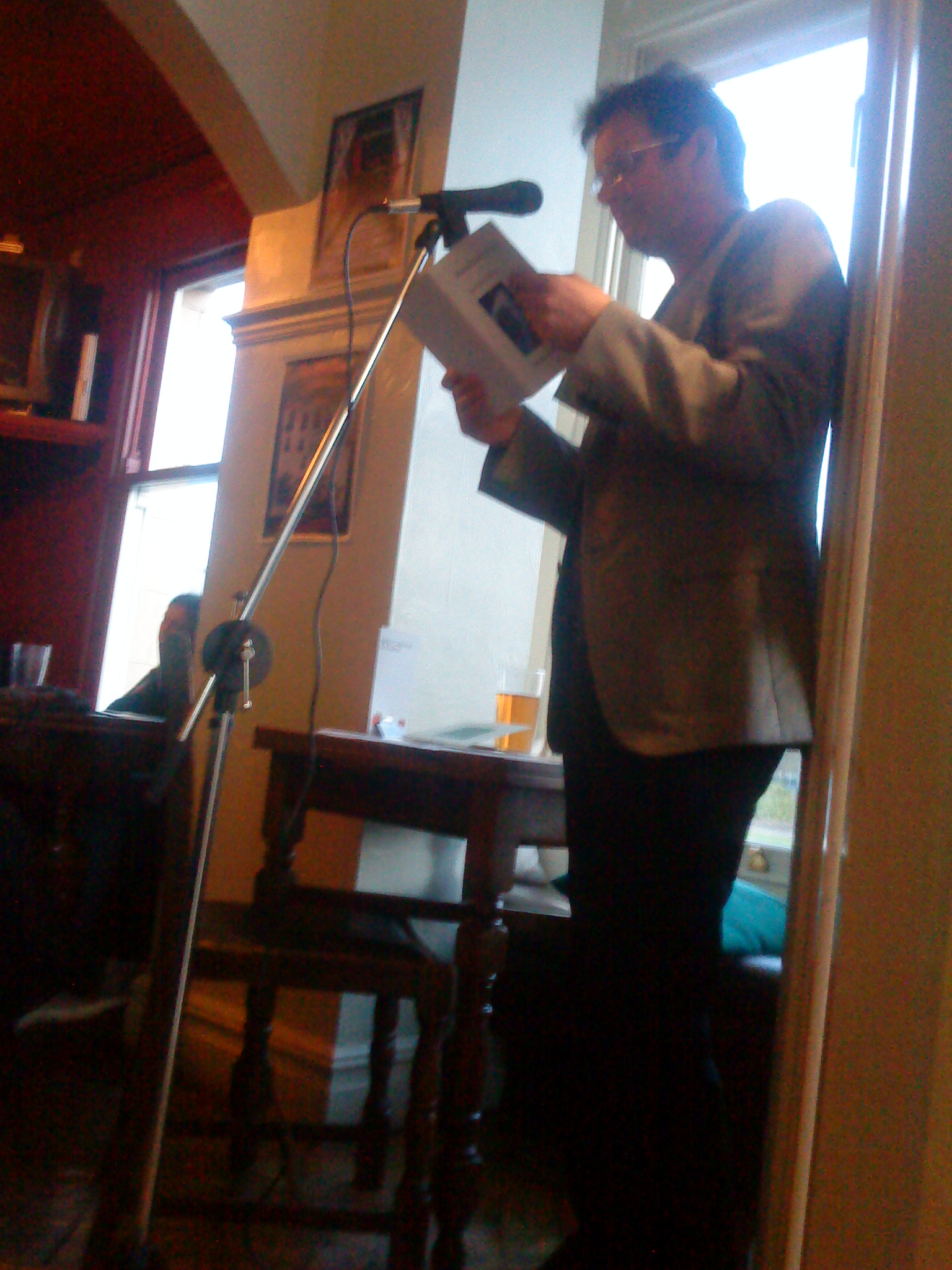
Ian Davidson

Ian Davidson in mirror
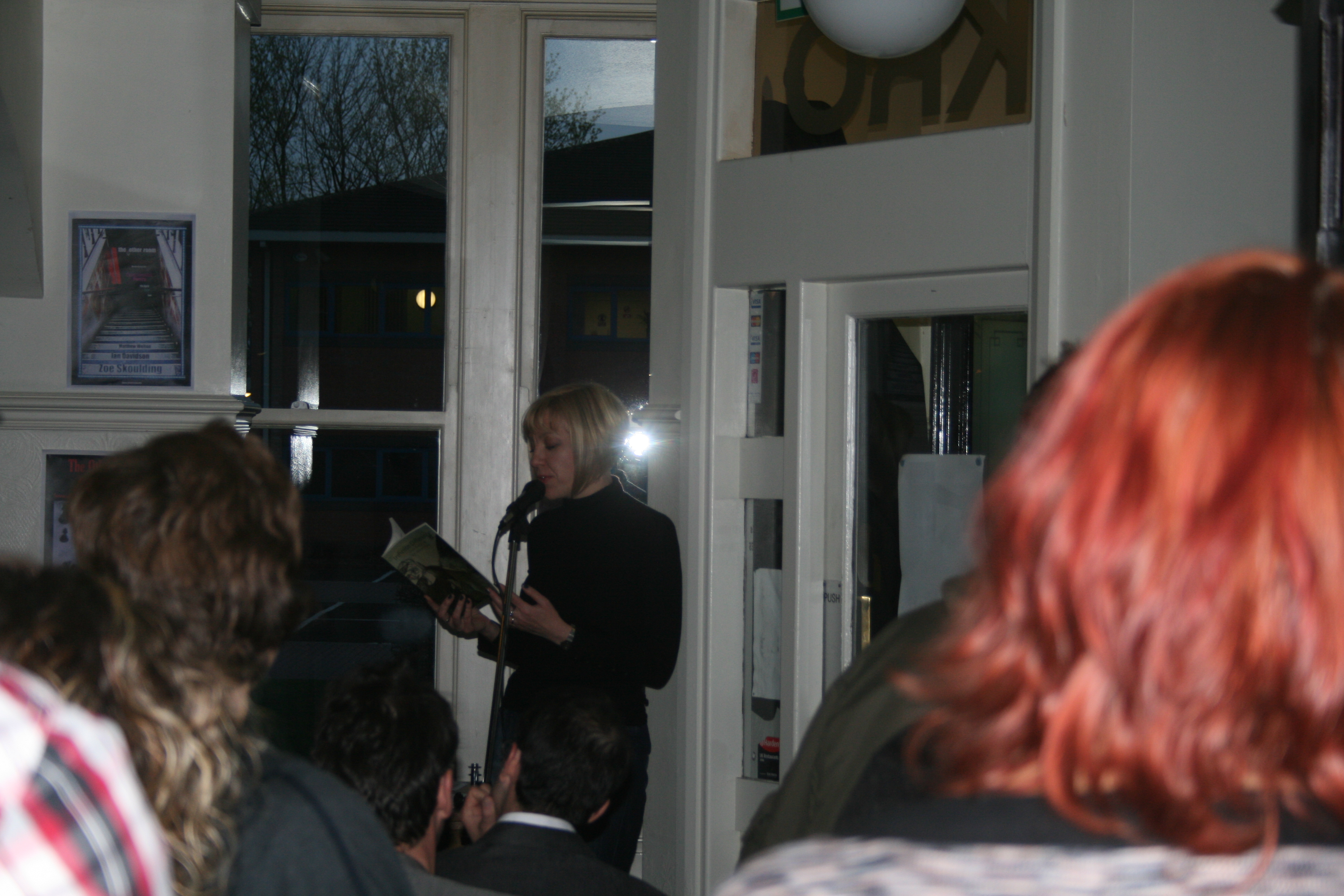
Zoe Skoulding
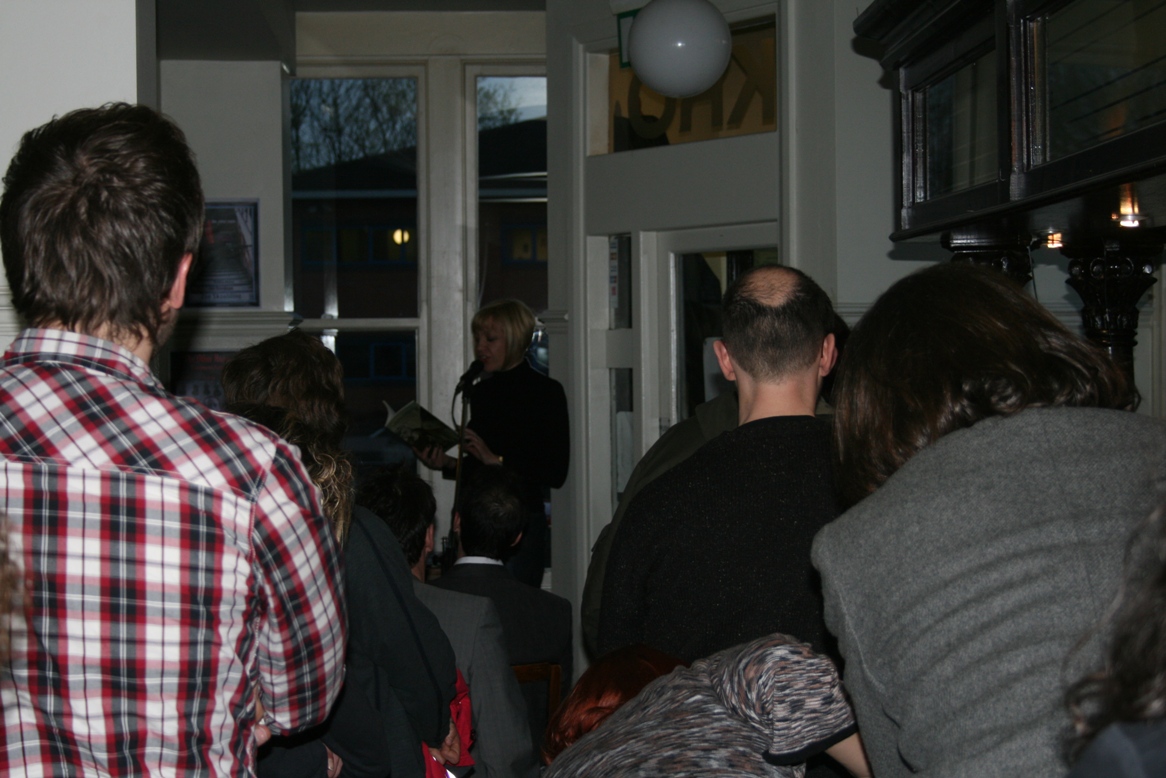
Zoe Skoulding
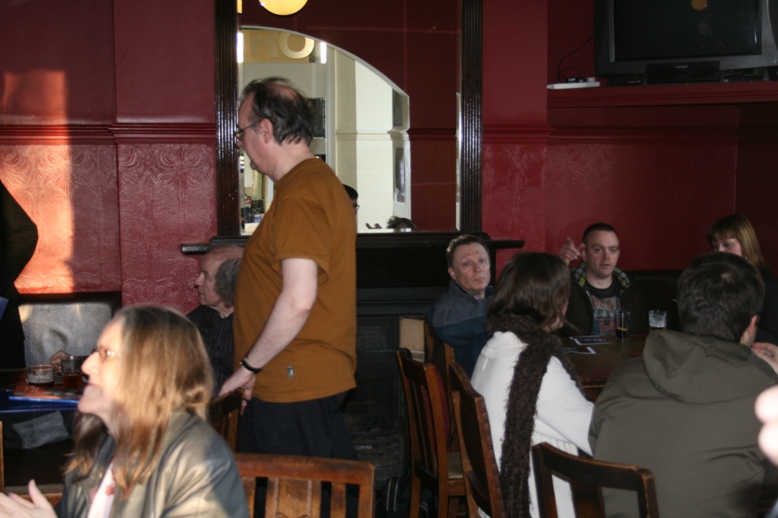
audience
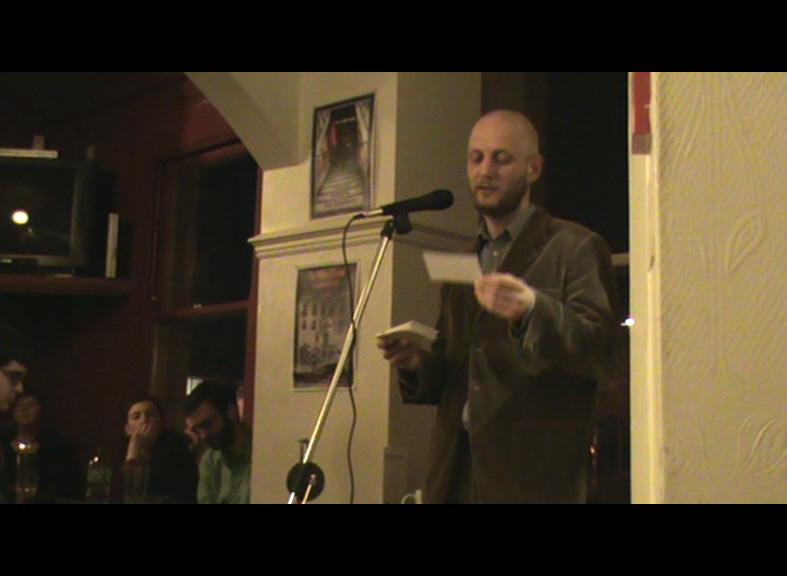
Matthew Welton
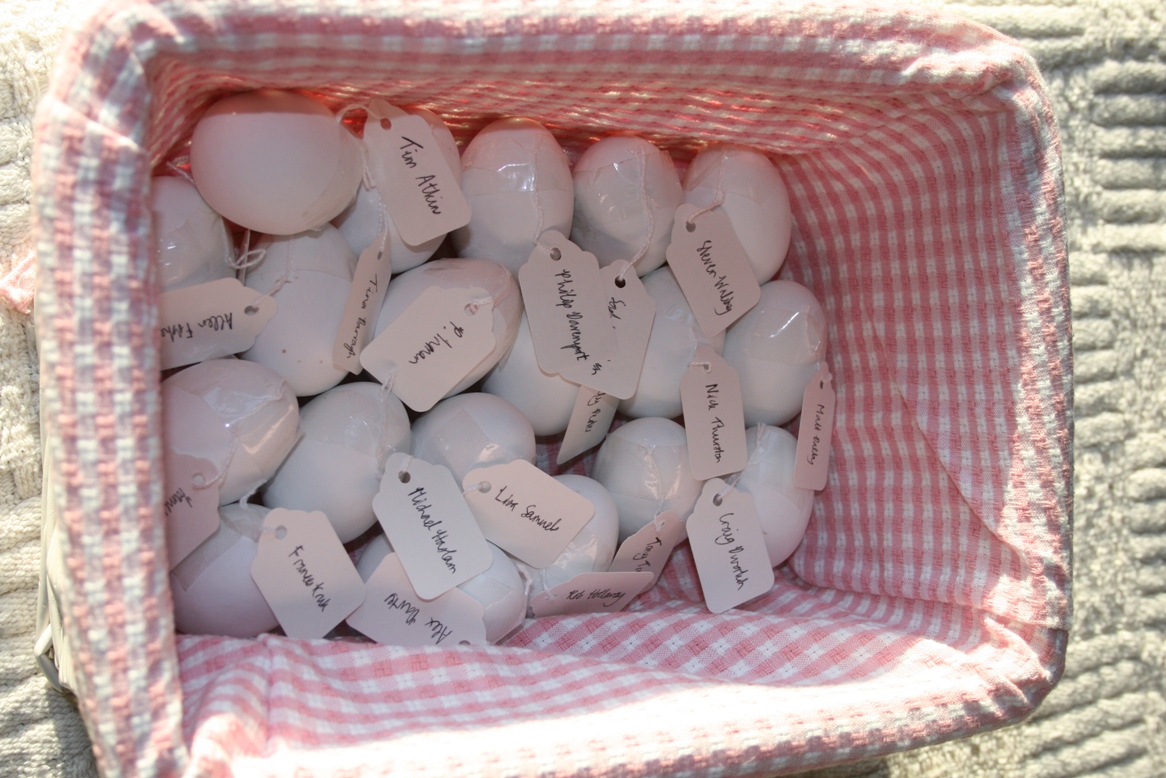
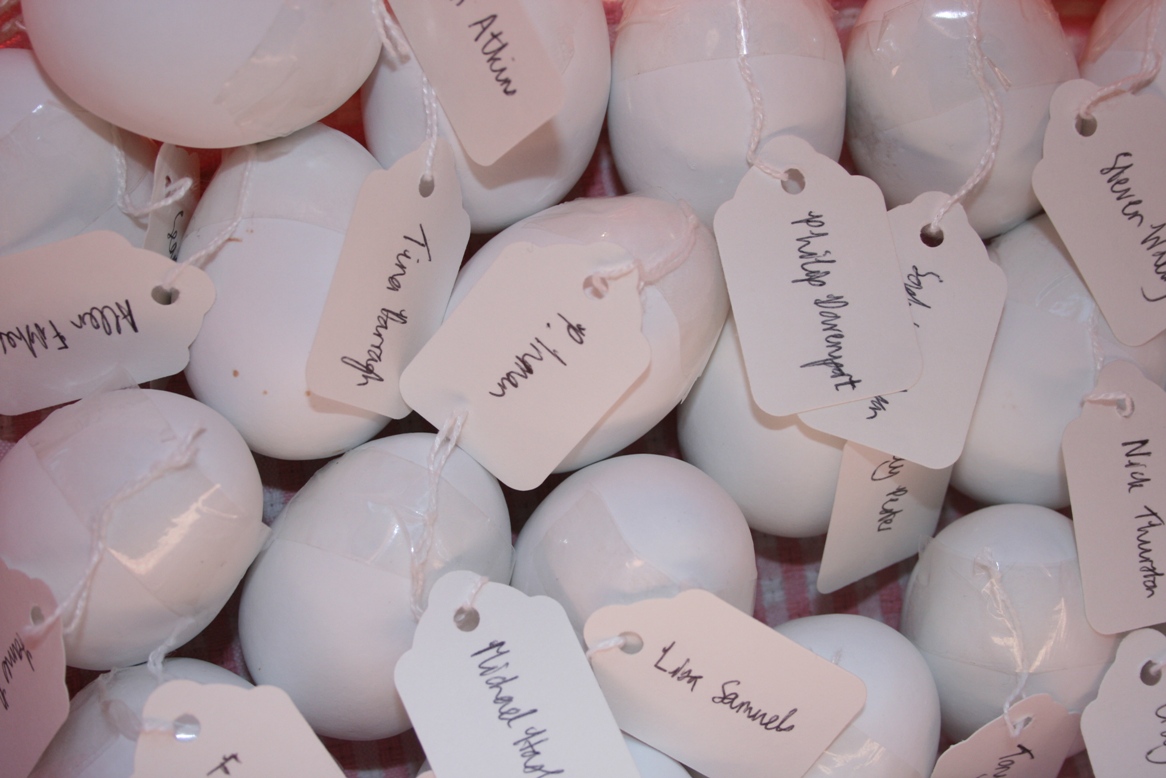
eggs
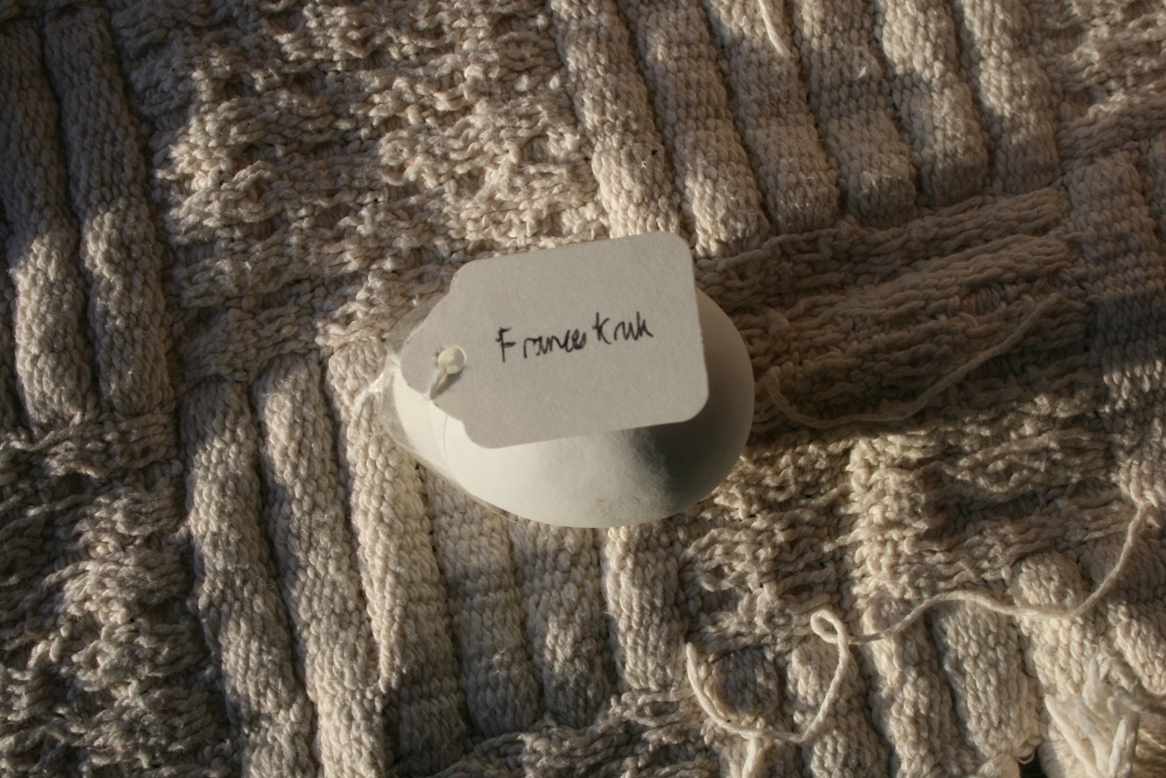
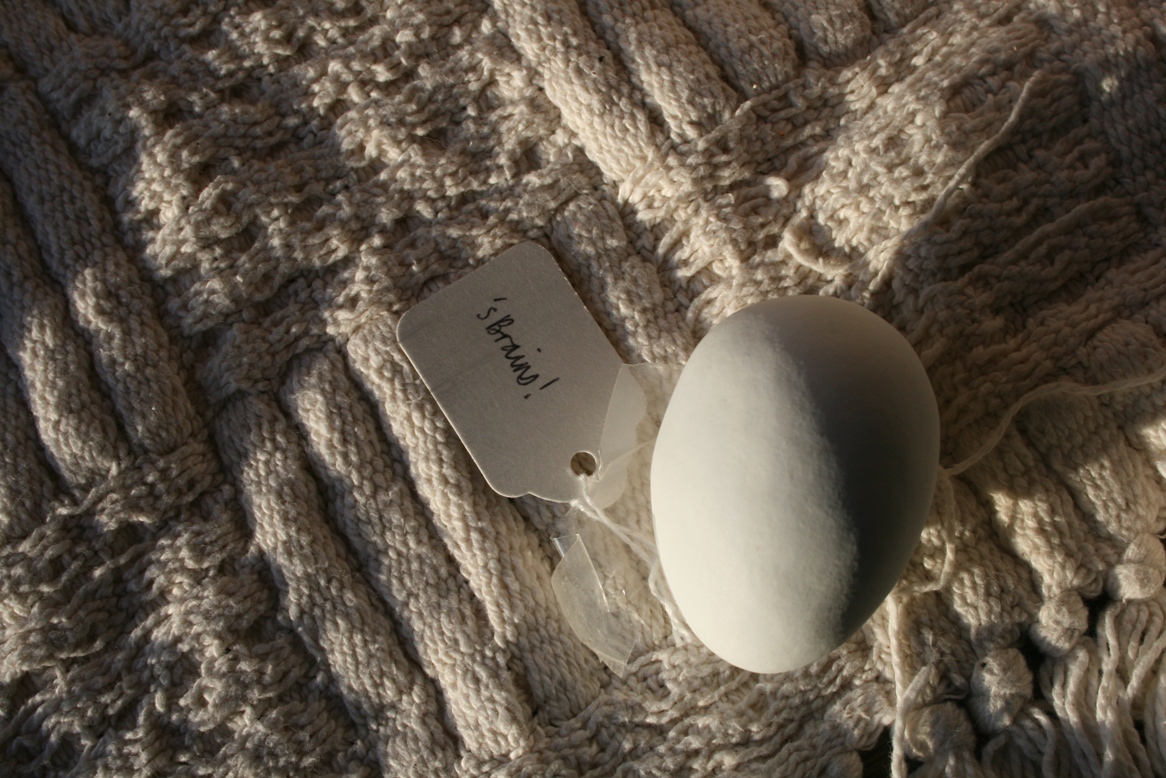
Frances Kruk’s egg
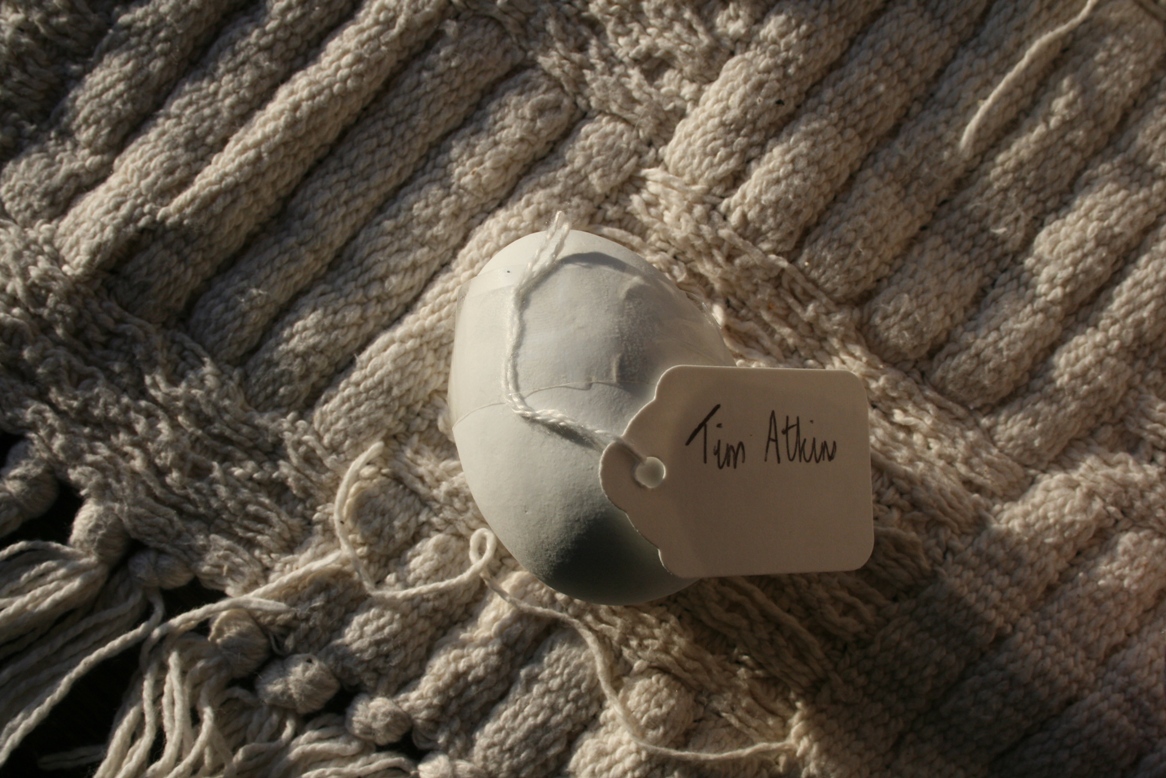
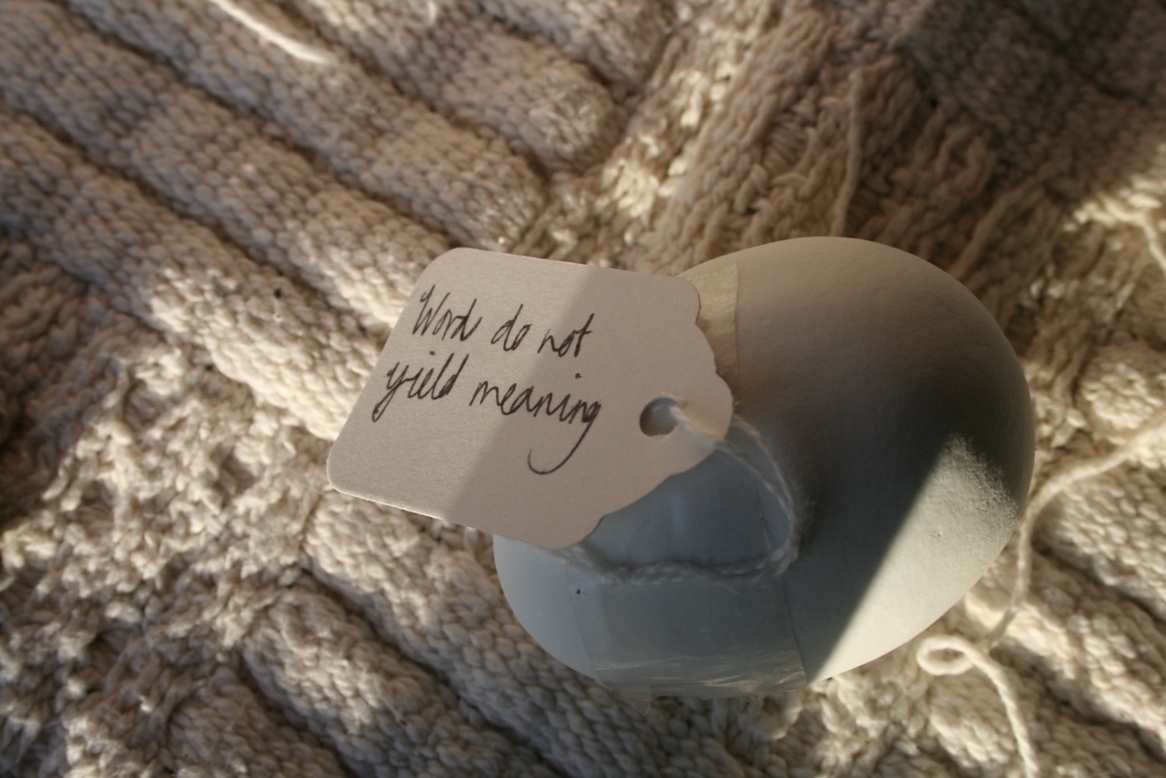
Tim Atkins’ egg
The Other Room – tonight
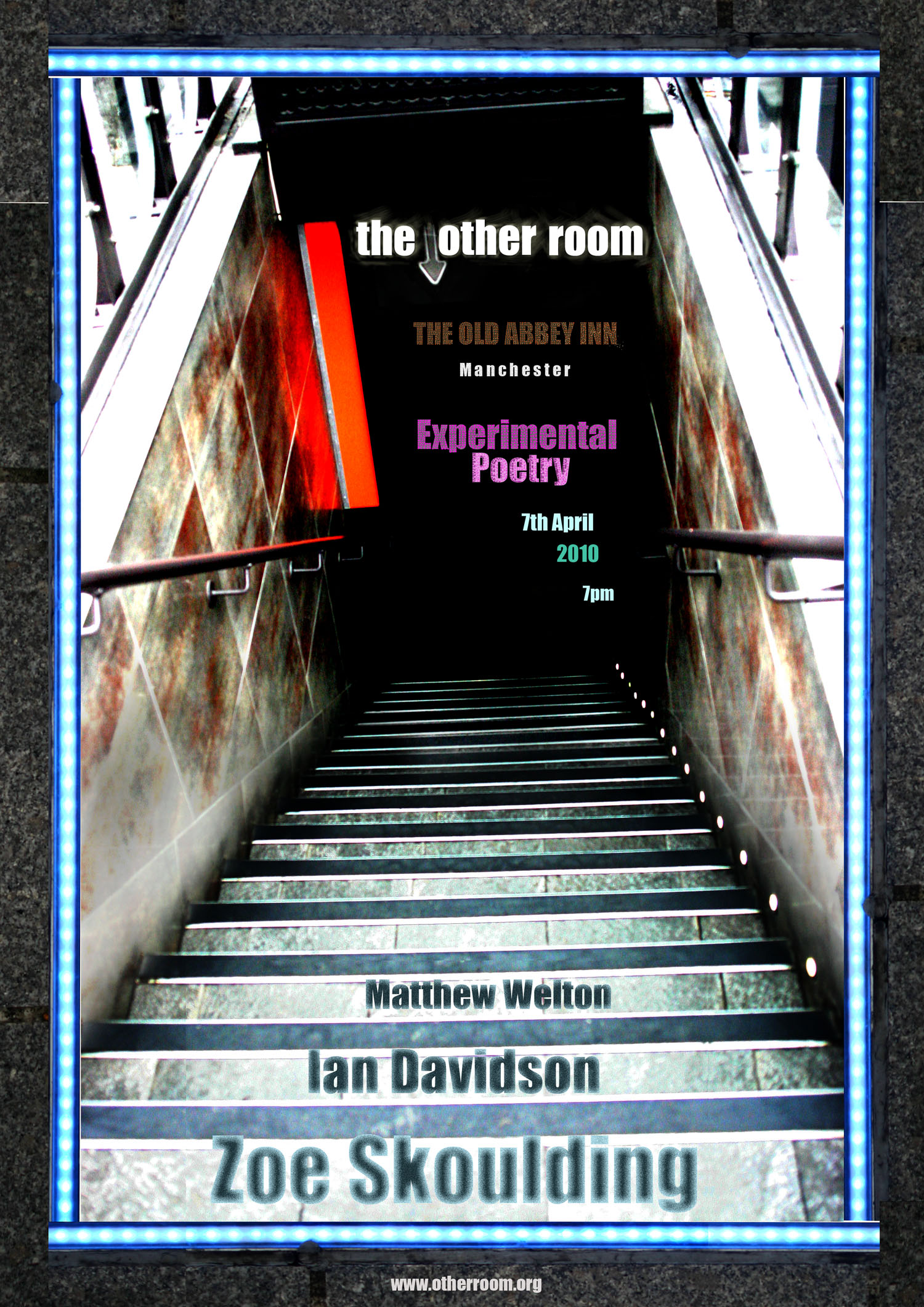
Preview of TOR April reader Matthew Welton
Preview of TOR April reader Zoe Skoulding
Becoming Post Avant
The thoughts of Steve Waling:
“It was a pressure in my head that made me finally admit that I was whatever kind of poet it is I think I’ve become. I had a failing poem that annoyed me so much, as a last resort, I cut it up. Lo! A light came down from heaven illuminating the path I must follow… or something… Rather, I discovered that I didn’t have to do the whole thing straight, that going the crooked route was just as interesting.”
More here. See Steve’s reading for The Other Room in February here.
Preview of TOR April reader Ian Davidson
The Other Room: tonight
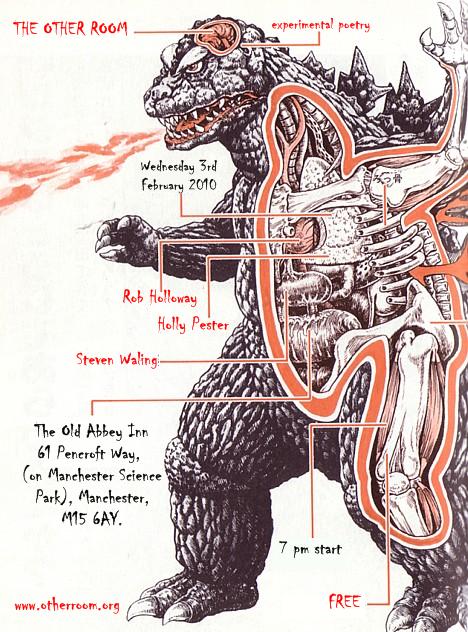
Preview of The Other Room reader February: Holly Pester
Armchair Emblems, Prosthetic Mottos & Walking Definitions: Fact Sheet
Fact sheet below.
See more emblems at onedit – LINK
Armchair Emblems, Prosthetic Mottos & Walking Definitions:
Fact Sheet
“I am on the hunt for constructions. I come into a room and find them whitely merging in a corner.” –Franz Kafka, Diaries
“In my life the furniture eats me.” –William Carlos Williams, Spring & All
EMBLEM
Invented in 1531 by a Florentine legal scholar named Andrea Alciato, the emblem is a tripartite structure composed of a motto or epigram (generally moral in theme), an icon (often referred to as the emblem’s ‘body’) and a commentary on the two in prose or poem form. Many emblems made variations on this formula.
ARMCHAIR EMBLEM
The upholstered emblem or armchair emblem incorporates only the epigram/motto and image tension of the Renaissance emblem but retains its conceptual gist and glyphic structure.
PROSTHETIC MOTTO
An aspirational embodiment or transcorporation for the body-image. “Building the muscles of mind’s legs.” Enhanced mobility via an ingested foreign body.
TRANSCORPORATION
A translation from one body to another. An ingestion or introjection.
WALKING DEFINITION
An indoor walking stick that defines constituents of the built interior as allegories of mind. A measure. A ‘getting underway’ instrument, frequently ‘left around.’
BUILT INTERIOR
An indoor pedestrian structure comprised of mobile furniture for the solicitation of thinking. An allegory of mind.
SOLICITATION
The directed rousal of thinking through upholstered didactic prompts or forms (an intelligent furniture).
FORMS
Ornaments of thought. Including: the glyphic (static—the emblem); the mnemonic (transcorporable—the prosthetic); the definitive (the Walking Definition).
FURNITURE
What is lived with. “The relation of with.” Any instrument or form housing information intended to be absorbed by accompaniment.
–THOMAS EVANS
The Snow Man
One must have a mind of winter
To regard the frost and the boughs
Of the pine-trees crusted with snow;
And have been cold a long time
To behold the junipers shagged with ice,
The spruces rough in the distant glitter
Of the January sun; and not to think
Of any misery in the sound of the wind,
In the sound of a few leaves,
Which is the sound of the land
Full of the same wind
That is blowing in the same bare place
For the listener, who listens in the snow,
And, nothing himself, beholds
Nothing that is not there and the nothing that is
Happy New Year
Guardian Reveals ‘Top Ten Poetry of the Noughties’
In its festive merriment, and review of the culture of the decad,e The Guardian takes a closer look at what’s been important over the last ten years in the world of poetry.
1. Miles Champion Three Bell Zero
2. Christian Bok Eunoia
3. Tim Atkins Horace
4. Peter Manson Adjunct: A Digest
5. Tom Raworth Collected Poems
6. P. Inman Ad Finitum
7. Ron Silliman The Alphabet
8. Tom Jenks A Priori
9. Caroline Bergvall Fig
10. Jeff Hilson (ed.) The Reality Street Books of Sonnets
Jeffrey Side interviews Kent Johnson at The Argotist Online
Check the link to see the interview:
The Other Room 12 – Tomorrow
Sunday 25thOctober, 1.45 pm. Part of the Oxjam festival.
Apotheca, 75-77 Thomas Street, Northern Quarter, Manchester, M4 1FS.
Admission is free, but a donation to Oxjam is suggested.
Readers: Stuart Calton, James Davies and Tony Trehy.

The Argotist Online – Alex Davies
The latest Argotist Online includes LONDON§TONE by Alex Davies, a highlight from his memorable reading at The Other Room in June. Check it out here.
Jim Carroll
onedit 14
onedit #14 is out today.
It features poems from:
Amy De’Ath
Johan de Wit
Daniel Kane
Chandler Lewis
Lissa Wolsak
A review of Kit Robinson’s Selected Poems is at:
Via Tim Atkins
Artists’ Taking the Lead
To have your say on the five regional projects, including Tony Trehy’s Language Moment, visit the link below:
 otherroom.org