Off the Shelf

From Steve Willey

OFF THE SHELF

Monday 22 March 6 – 10:30 p.m.

OFF THE SHELF, is an event that involves musicians, poets, painters and film makers, it is structured around, and is in dialogue with, the Small Press and Little Magazine Collection at UCL. 

Over the next two weeks I am going to try and put together a short Ten Minute Film about Writers Forum and AND Magazine which will be shown at this event. 

I will be filming over an EIGHT-DAY period, from 3 – 10 March. I will be editing the film on the 11 March. I will be submitting the film on the 12 March for inclusion in the event on the 22 March. So a very tight turn around.

Please email me before the 3 march (swilley17[at]aol[dot]com) to let me know your availability between the 3-10 march (all the possible times you could be free) and i will endeavor to meet with as many people as I can within that time frame. To structure the film I propose to film short responses to the following topics (see below) from poets that have been involved/published in AND magazine and by Writers Forum. 

I  know that by working with such a short time frame the film will not be an authoritative or comprehensive record of the long and amazing projects that are Writers Forum Press and AND magazine but i hope the film will be a worthwhile document which will raise the profile of AND Magazine and Writers Forum Press and act as an introduction to these projects 

Some Topics to Stimulate Conversation (not necessarily to be followed):

  • How did you find out about AND Magazine and Writers Forum Press?
  • What was the first poem that you ever had published in AND?
  • What was the first work you had published by Writers Forum Press?
  • If you only had 20 words how would you describe AND Magazine and/or Writers Forum Press.
  • How has being involved with Writers Forum Press and/or AND Magazine effected your poetry, in aesthetic,  political or social terms?
  • To your mind, over the period you have been acquainted with AND Magazine, and/or Writers Forum Press,  what were the most significant social, aesthetic and/or political changes, that have both effected AND  Magazine and Writers Forum Press, and/or have been represented by And Magazine and the Press?
  • What is the most important question that I should have asked that I haven’t and what is the answer?
  • Can you now read a poem you like from either one of the And Magazines or from on of the Writers Forum  Publications?
  • How significant has the work of Bob Cobbing been to your practice as a poet?

PLEASE DISTRIBUTE THIS POST  TO ANYONE CONNECTED TO WRITERS FORUM OR AND, WHO YOU THINK MIGHT WANT TO BE INCLUDED IN THE FILM.

I AM BASED IN LONDON BUT CAN DRIVE TO FILM YOU (and i am willing to travel). HOWEVER, IF YOU HAVE ACCESS TO YOUR OWN FILMING EQUIPMENT AND/OR LIVE ABROAD, PLEASE FEEL FREE TO FILM YOUR OWN RESPONSES TO THE ABOVE TOPICS AND SEND ME THE FOOTAGE IN HIGH RESOLUTION QUICK TIME FORMAT BEFORE THE 10TH OF MARCH. YOU CAN EMAIL ME or ask me FOR MY POSTAL ADDRESS ON THE EMAIL INCLUDED IN THIS POST.
Plus-que-Parfait

Plus-que Parfait is an evolving, open-ended text created by Emily Howard, Mark Cobley & Simon Howard. Emily is a musician & writer & the founder of Ensemble Youkali, Mark blogs at the red ceilings, Simon at walking in the ceiling. Mark & Simon have recent books from The Arthur Shilling Press. The three are not related, except where they are related; they do not live in the same place/space except when two of them do.

More here.

Via Harry Godwin

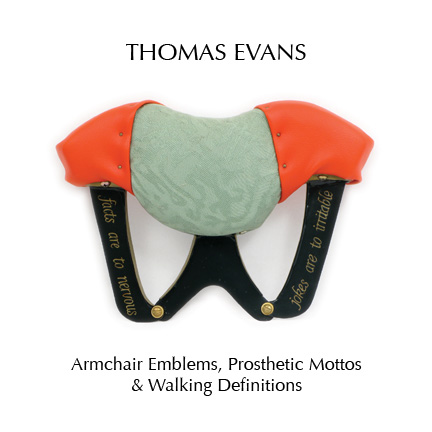
Armchair Emblems, Prosthetic Mottos & Walking Definitions: Fact Sheet

Fact sheet below.

See more emblems at onedit – LINK

Armchair Emblems, Prosthetic Mottos & Walking Definitions:

Fact Sheet

“I am on the hunt for constructions. I come into a room and find them whitely merging in a corner.” –Franz Kafka, Diaries

“In my life the furniture eats me.” –William Carlos Williams, Spring & All

EMBLEM

Invented in 1531 by a Florentine legal scholar named Andrea Alciato, the emblem is a tripartite structure composed of a motto or epigram (generally moral in theme), an icon (often referred to as the emblem’s ‘body’) and a commentary on the two in prose or poem form. Many emblems made variations on this formula.

ARMCHAIR EMBLEM

The upholstered emblem or armchair emblem incorporates only the epigram/motto and image tension of the Renaissance emblem but retains its conceptual gist and glyphic structure.

PROSTHETIC MOTTO

An aspirational embodiment or transcorporation for the body-image. “Building the muscles of mind’s legs.” Enhanced mobility via an ingested foreign body.

TRANSCORPORATION

A translation from one body to another. An ingestion or introjection.

WALKING DEFINITION

An indoor walking stick that defines constituents of the built interior as allegories of mind. A measure. A ‘getting underway’ instrument, frequently ‘left around.’

BUILT INTERIOR

An indoor pedestrian structure comprised of mobile furniture for the solicitation of thinking. An allegory of mind.

SOLICITATION

The directed rousal of thinking through upholstered didactic prompts or forms (an intelligent furniture).

FORMS

Ornaments of thought. Including: the glyphic (static—the emblem); the mnemonic (transcorporable—the prosthetic); the definitive (the Walking Definition).

FURNITURE

What is lived with. “The relation of with.” Any instrument or form housing information intended to be absorbed by accompaniment.

–THOMAS EVANS

Speak is Code

If you’re in China, near the Jiao Tong Teahouse, catch up with Phil Davenport’s poetry/art exhibition,Speak is Code

Jiao Tong Teahouse 27-30 December 2009
Yao Bo, Philip Davenport, Wang Jun

Jiao Tong Teahouse is a mesh of conversations, meetings, deals made, gambling, gossip and over it all, parrots swing on their perches, aping the human noise. It is an intersection and into it the work of three artists is placed for Speak is Code. The works explore the space between us all, locate the holes in language and – as Davenport’s poem says – “The impasse between skin.”

Yao Bo, ceramicist and painter premieres a version of her continuing major work On Reading Beckett: a long text response to Beckett is handwritten in Chinese script onto manuscript paper. “I was murmur-reading Beckett, muttering to myself. The poem shot sunlight from faraway into my thoughts…” As counterpoint, a series of collapsed pots – like collapsed lungs – are placed onto each piece of paper. From some of the pots comes the sound of the piece being read aloud. Yao Bo’s work explores the delicate seams of identity – where we join and where we fall apart. “These pieces of pottery are like the organs of no-body. Some silent, some murmuring, some…”

My Paintings are Invisible by Philip Davenport is a poem sequence combining Chinese and Western alphabets. The work is dedicated to Hai Zi (1965-89) the Chinese poet. Alphabets of East and West entwine to make word pictures, ‘invisible paintings’, each given an imaginary colour. They are on translucent paper, scripted half in Chinese (by Chinese artists) and half in English. The two alphabets sometimes join, sometimes separate. These are ‘paintings’ of absence, images that never grow clear – and Hai Zi becomes a symbol for all who are missing, all that we cannot say.

(txt/work, Wang Jun 2009)

Wang Jun is an artist whose works balance meaning against nothing. His recent pieces cross-breed industrial processes with the landscapes of hanzi that fill his paintings. He crunches together the Tao Te Ching, Wiggenstein and postmodernity into mould-pressed misfits. He will install a bookshelf of unreadable materials in the teashop.

Exhibition curated by Philip Davenport, artist in residence 501 Artspace. Contributing artists to My Paintings are Invisible; Dan Ting, Deng Chuan, Mao Yan Yang, Pang Xuan, Wang Jun, Xu Guang Fu, Yan Yan, Zheng Li; translation Deng Chuan, Yan Yan and Zhong Na.

Beyond the Book

This is a course i’m teaching in Manchester. It’s good to see the Poetry School venture into such things. Please pass on if you know anybody who’d be interested. The details and blurb are below as well as a rough weekly schedule. There will also be a class website.

Beyond the Book: alternative approaches to writing
Tutor: James Davies
Venue: The Tai Chi Village Hall, Manchester
Duration: 10 weekly sessions
Day & Time Tuesday’s, 7.30-9.30pm
Start Date 12th Jan 2010
Cost £99.00 (£76.00 concs)

Home

The blurb reads:

These days, there are endless exciting opportunities for writers in the way that they write; and how they publish, experience and share their work. On this course you’ll do a number of exercises exploring alternative writing styles (including those spawned by the internet), consider the myriad of possibilities of collaboration (both with real and virtual bodies), and think about blogging, social networking and alternative methods of publishing work other than the traditional book.

Weekly schedule:
1. Internet as playground
2. Internet as resource
3. Internet as resource pt 2
4. Systems
5. Translation
6. Tanslation pt 2
7. Collaboration
8. Interventions
9. Class filming, audio and archiving
10. Class production and distribution

Lightboxes

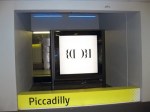
LighBoxPic-Secret

Manchester’s Piccadilly Metro station features a set of nine lightboxes facing the platforms which are devoted to display of artworks. Originally part of the Text Festival but delayed due to engineering works, the station has just reopened with text works selected by Tony Trehy supported by the Hamilton Project.

More.

Researchers seek UK ‘soundscapes’

A project has launched to capture the sounds of UK locations, mapping  
them to create “soundscapes” that can be visited by users of the  
project’s site.
Participants are asked to record 5 – 10 second intervals of sound  
using their mobile phones, describing where and why they took the  
recording.
The sound samples are then uploaded to a site where they are mapped.

LINK

via mIEKAL aND

Cleaves

Cleaves is a new journal collecting poetry from the United Kingdom and Europe. Each area will have an editor, who selects another editor after their issue is complete.

Areas and Editors identified so far include:

London – Sean Bonney
Brighton
Liverpool/Manchester – Richard Barrett
Midlands
North East
South-West (Bristol, Dartington & Plymouth)
Cork, Ireland – David Toms
Denmark, Poland and Turkey – Marcus Slease

If you would like to suggest/discuss an area or volunteer to be an editor, please go to http://cleavesjournal.wordpress.com/ and email poet and webmaster Harry Godwin using the link provided on the site.

Here is the guidance for editors that is posted on the website:

3 to 4 pages (this is not strict) of 3 poets (2 + your work, though you don’t have to include your work), from your local area and/or scene of poets.

You may create/commission your own cover of the issue for your area – all covers will be displayed online in a separate document. You may just choose to use the online cover. Anything goes.

Once you have edited your selection together send it to the webmaster (me for the time being: h j g o d w i n @ g m a i l . c o m).

When I have received all of the expected collections I will collate them and send them out to all editors.

You can print the journal any way you see fit – in booklet form (by using Adobe Reader – print as booklet, then you’ll have to print half of it, turn it over manually and print the other half – I have a good method of doing this, e-mail me for help), or as an A4 document or…

Distribute the journal – either through the associated reading series, or at any reading series you attend. You can charge for it to cover your printing costs and the cost may vary depending on how large it is. If there is any profiteering, I would love to see some.

Choose the next editor wisely, and ask them to e-mail or call me.

Thank you for donating your editing time to Cleaves!